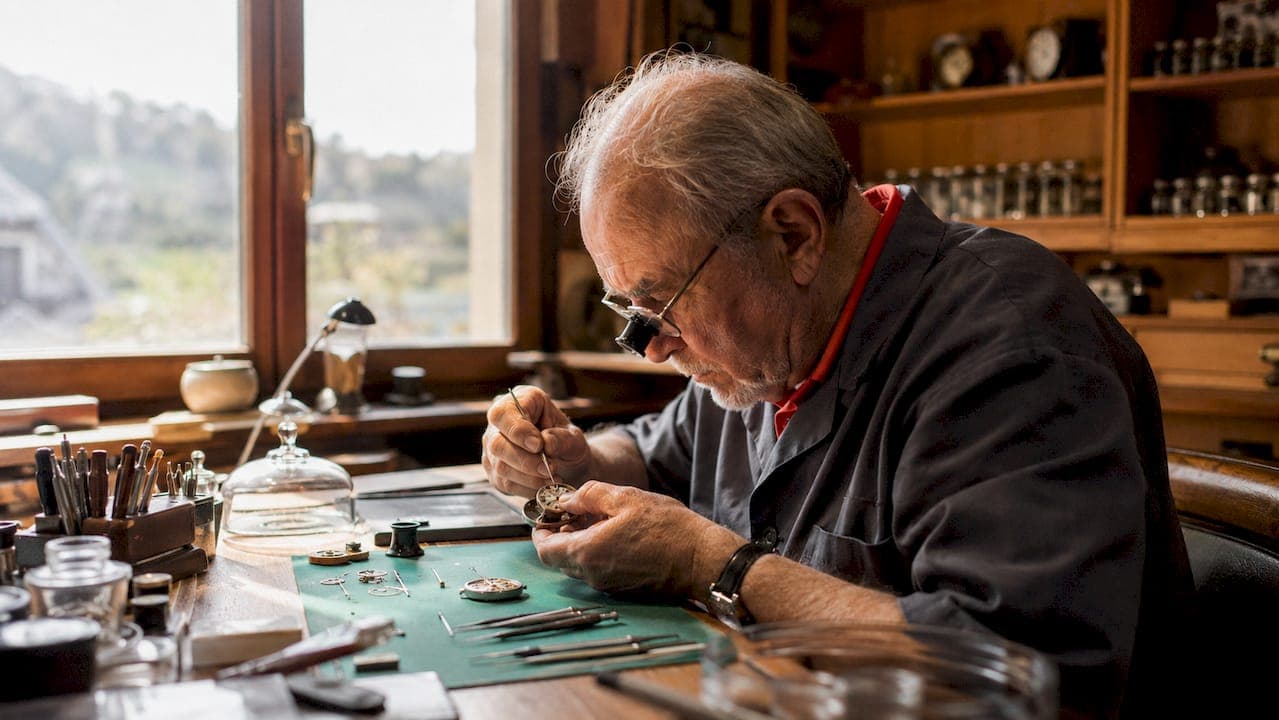
An automatic Swiss watch is a self-winding mechanical timepiece that uses the natural motion of your wrist to power its movement, requiring no battery. The term "automatic Swiss" refers broadly to what the industry calls a Swiss made automatic, a designation governed by strict origin and quality rules set by Swiss law. Brands like Rolex, Patek Philippe, Audemars Piguet, Omega, Maurice Lacroix, and Swatch have built the global reputation for this category. What separates these watches from battery-powered alternatives is not just how they work. It is the depth of craft, the measurable accuracy standards, and the long-term value they carry for serious collectors.
What technical features distinguish Swiss automatic watches?
Swiss automatic watches share a core set of technical features that define their quality and durability. Understanding these specs helps you evaluate any model before buying.
The most reliable Swiss automatics include scratch-resistant sapphire crystal, water resistance rated at 100–200 meters, and exhibition casebacks that expose the movement to view. Sapphire crystal resists daily scratches far better than mineral glass. Water resistance at 100 meters covers swimming and rain; divers' models push to 200 meters or beyond for active use.
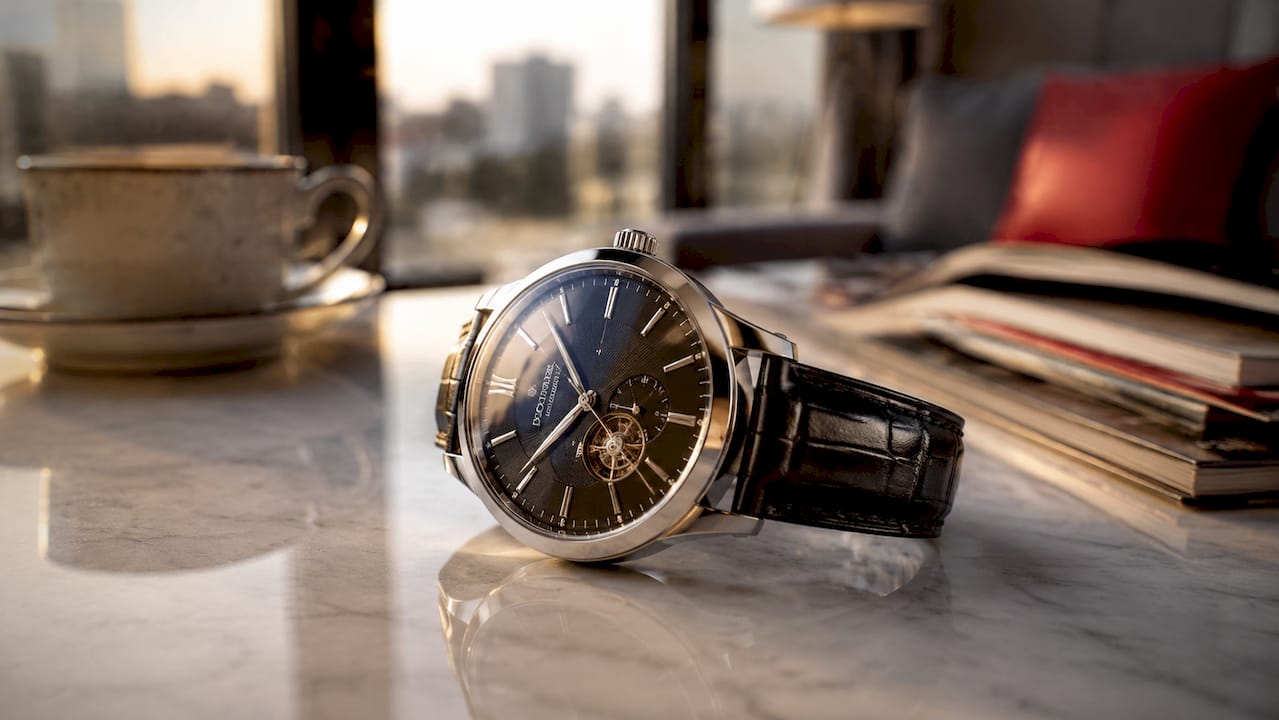
Jewel count is another key spec. Swiss automatics carry 21 to 26 jewels embedded in the movement to reduce friction at high-stress pivot points. More jewels do not always mean better quality, but they do signal a movement built for longevity. The rotor, which spins with wrist movement, transfers energy to the mainspring through these jeweled bearings.
Power reserve is the practical spec most buyers overlook. Automatic movements typically store 38–42 hours of energy when fully wound. That means a watch left on the nightstand over a long weekend will stop and need resetting by Monday morning.
Here is a quick reference for the core technical specs found across quality Swiss automatics:
| Feature | Typical Specification |
|---|---|
| Crystal | Sapphire, anti-reflective coating |
| Water resistance | 100–200 meters |
| Power reserve | 38–42 hours |
| Jewel count | 21–26 jewels |
| Caseback | Exhibition (see-through) |
Pro Tip: Always check the power reserve spec before buying. A 42-hour reserve gives you a full weekend buffer; anything under 38 hours means the watch may stop by Sunday if you switch to another piece on Saturday.
How do Swiss automatic movements vary?
Not all Swiss automatic movements perform equally. The caliber inside the case determines accuracy, repairability, and long-term value.
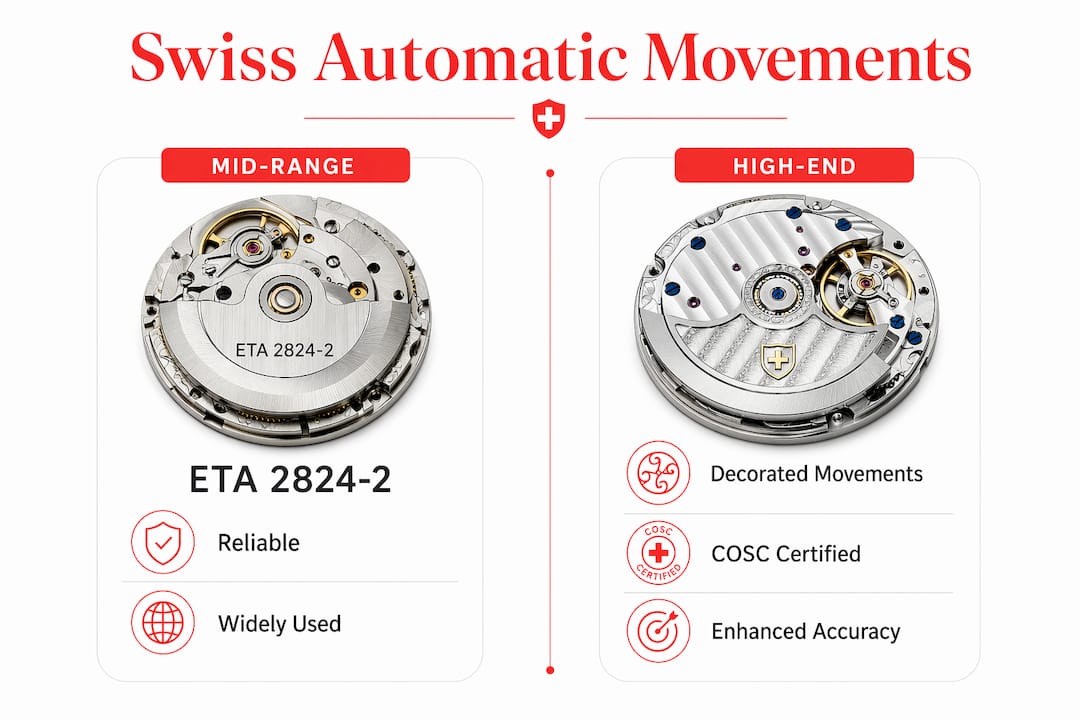
The ETA 2824-2 is one of the most widely used Swiss movements in the mid-range segment. It powers watches from Epos, Maurice Lacroix, and dozens of other brands. The Swatch Group's SISTEM51 uses a fully automated assembly process with just 51 components, making it the most affordable certified Swiss automatic on the market. Brands like LIV Watches develop proprietary calibers built on established Swiss bases, then calibrate them through multi-stage monitoring before shipping.
Movement decoration is where enthusiasts separate standard from exceptional. Finishing styles like Côtes de Genève, perlage, and colimaçon are applied by hand to movement plates and rotors. These patterns serve no mechanical function. They exist purely as proof of craft. An exhibition caseback lets you see this work directly, which is why collectors treat it as a quality signal rather than a cosmetic option.
COSC certification is the most recognized accuracy standard in the industry. COSC guarantees accuracy of -4/+6 seconds per day for certified chronometer movements. That is a tighter tolerance than most standard Swiss automatics achieve. Patek Philippe goes further with its own Patek Philippe Seal, which requires accuracy within -3/+2 seconds per day. Rolex applies its Superlative Chronometer standard, certified to -2/+2 seconds per day.
Here is how three common movement tiers compare:
| Movement tier | Example calibers | Accuracy standard | Typical price range |
|---|---|---|---|
| Entry-level | SISTEM51, ETA 2824-2 | Standard Swiss | $300–$800 |
| Mid-range | ETA 2824-2 elaboré, ML115 | Brand-certified | $800–$3,000 |
| High-end | In-house (Rolex, Patek) | COSC or stricter | $3,000+ |
- Check whether the movement is standard, elaboré, or top-grade. Each tier has tighter tolerances and finer finishing.
- Look for COSC certification or a brand-specific accuracy guarantee in the product specs.
- Verify the movement through the exhibition caseback before purchase when buying pre-owned.
- Research service intervals. Most Swiss automatic movements need a full service every 5–7 years.
Pro Tip: A COSC-certified movement adds resale credibility. If two watches are priced similarly, the certified one will hold its value better in a secondary market sale.
What is the price range and investment outlook for Swiss automatics?
Swiss automatic watches span a wide price range, and where you buy on that spectrum determines both your daily experience and your long-term return. Entry-level models like the Swatch SISTEM51 start around $300–$500. That price gets you a genuine Swiss made automatic with a certified movement and solid build quality. It is the most accessible entry point in the category.
Mid-range Swiss automatics from brands like Epos and Maurice Lacroix run from $800 to $2,000. These watches typically include COSC-adjacent accuracy, exhibition casebacks, and sapphire crystals. They represent the strongest value-to-craft ratio in the market. Luxury models from Movado, Bremont, and Omega exceed $3,000, while Rolex, Patek Philippe, and Audemars Piguet command prices well above $5,000 for entry references. The price spectrum from $300 to $5,000+ reflects real differences in movement finishing, case materials, and brand heritage.
Investment potential concentrates at the top and the bottom of the market, not the middle. Rolex Submariner and Patek Philippe Nautilus references have appreciated significantly over the past decade. At the entry level, limited-edition Swatch collaborations have sold at multiples of retail on secondary markets. Mid-range watches from Epos or Maurice Lacroix hold value well but rarely appreciate. They are collector pieces, not financial instruments.
Key factors that drive value retention in Swiss automatics:
- Brand heritage: Rolex, Patek Philippe, and Audemars Piguet carry the strongest secondary market demand.
- Movement quality: In-house calibers with COSC or stricter certification outperform generic movements at resale.
- Condition and box/papers: A complete set with original box and papers adds measurable value at auction.
- Reference rarity: Limited production runs and discontinued references command premiums. Reference numbers matter more than most buyers realize.
- Complications: Perpetual calendars, tourbillons, and minute repeaters add both value and collectibility.
For a first investment-grade purchase, the Omega Seamaster and Speedmaster lines offer the best combination of brand prestige, movement quality, and accessible entry pricing in the luxury tier.
What are the practical realities of owning a Swiss automatic?
Owning a Swiss automatic watch requires a different mindset than wearing a quartz or smartwatch. The watch depends on your wrist motion to stay wound. If you wear it daily for at least 8–10 hours, the rotor keeps the mainspring charged. If you rotate between multiple watches, the one sitting in your drawer will stop.
The 38–42 hour power reserve is the key number to manage. A watch that stops needs manual winding and time resetting before it is accurate again. For collectors with multiple pieces, a watch winder solves this problem. Watch winders keep automatics running by rotating the case on a programmed schedule, mimicking wrist movement. Quality winders from brands like Wolf or Orbita are worth the investment if you own three or more automatics.
Water resistance ratings require careful attention. A watch rated at 100 meters handles swimming and rain but not scuba diving. A 200-meter rating covers recreational diving. Never test water resistance on an older watch without a fresh gasket check. Gaskets degrade over time, and a watch that was once water-resistant may no longer be after years of wear.
Routine servicing is non-negotiable. Most Swiss automatic movements need a full service every 5–7 years. A service includes cleaning, lubrication, gasket replacement, and accuracy calibration. Skipping service does not just risk accuracy. It risks permanent damage to the movement. Budget $300–$800 for a mid-range service and $1,000 or more for high-end in-house calibers.
Pro Tip: Before buying a pre-owned Swiss automatic, ask for the last service date. A watch that has not been serviced in over 7 years needs immediate attention, and that cost should factor into your offer price.
Key Takeaways
Swiss automatic watches reward collectors who understand movement quality, certification standards, and the real cost of ownership before they buy.
| Point | Details |
|---|---|
| Technical specs matter | Sapphire crystal, 100–200m water resistance, and 21–26 jewels define quality Swiss automatics. |
| Movement tier drives value | COSC-certified and in-house calibers hold resale value better than standard movements. |
| Price range is wide | Entry-level starts at $300; investment-grade luxury begins above $3,000. |
| Power reserve is practical | A 38–42 hour reserve means unworn watches stop and need resetting. |
| Service is mandatory | Budget for a full movement service every 5–7 years to protect your investment. |
Why I think most buyers approach Swiss automatics the wrong way
The most common mistake I see is treating accuracy as the primary buying criterion. Buyers obsess over whether a watch runs at -2 or +4 seconds per day, then ignore the movement finishing, the service history, and the reference number. Those three factors matter far more to long-term satisfaction and resale value than a few seconds of daily drift.
The emotional connection to mechanical timekeeping is real, and it is not sentimental nonsense. There is a genuine difference between glancing at a phone and reading a watch that has been running continuously on your wrist for three years. That relationship with an object changes how you think about time. No smartwatch replicates it.
My recommendation for a first Swiss automatic: buy in the $800–$1,500 range from a brand with a proven service network. Maurice Lacroix, Epos, and Omega all qualify. Avoid the temptation to start at the bottom just to own something Swiss. A $300 SISTEM51 is a fine watch, but it will not teach you what you need to know about movement quality or craft. Buy something with an exhibition caseback and spend time actually looking at the movement. That habit will make you a better collector faster than any amount of reading.
The misconception I push back on hardest is that Swiss automatics are fragile. A properly serviced Rolex or Omega will outlast its owner. The fragility people perceive comes from neglect, not design. Service your watch, respect its water resistance rating, and it will perform for decades.
Explore Swiss automatic watches with Timepiecepulse
Timepiecepulse covers the full spectrum of Swiss automatic timepieces, from accessible entry-level pieces to investment-grade references from Patek Philippe, Rolex, and Audemars Piguet.
The luxury watch reviews section covers premium Swiss automatics with detailed movement analysis, pricing context, and collector insights. For buyers working with a tighter budget, the affordable classics guide identifies mid-range Swiss automatics that combine genuine craft with strong value retention. Whether you are buying your first automatic or adding a serious reference to your collection, Timepiecepulse provides the depth and specificity serious collectors need.
FAQ
What makes a watch officially "Swiss made automatic"?
A watch earns the Swiss made designation when its movement is Swiss, cased in Switzerland, and the manufacturer's final inspection occurs in Switzerland. This legal standard is enforced under Swiss ordinance and protects the designation from misuse.
How accurate are Swiss automatic watches compared to quartz?
Standard Swiss automatics run within roughly -10/+30 seconds per day without certification. COSC-certified movements narrow that to -4/+6 seconds per day. Quartz watches are more accurate by raw numbers, but accuracy is rarely the reason collectors choose mechanical movements.
Do Swiss automatic watches need batteries?
No. Swiss automatic watches are powered entirely by mechanical energy stored in a mainspring. The rotor winds the mainspring through wrist movement, eliminating any need for a battery.
How often should a Swiss automatic be serviced?
Most Swiss automatic movements require a full service every 5–7 years. Service includes cleaning, lubrication, gasket replacement, and accuracy calibration to keep the movement running within spec.
Are Swiss automatic watches a good investment?
Watches from Rolex, Patek Philippe, and Audemars Piguet have strong secondary market track records. Mid-range Swiss automatics from brands like Epos and Maurice Lacroix hold value well but rarely appreciate. Investment potential depends heavily on brand, reference number, condition, and whether the watch comes with its original box and papers.