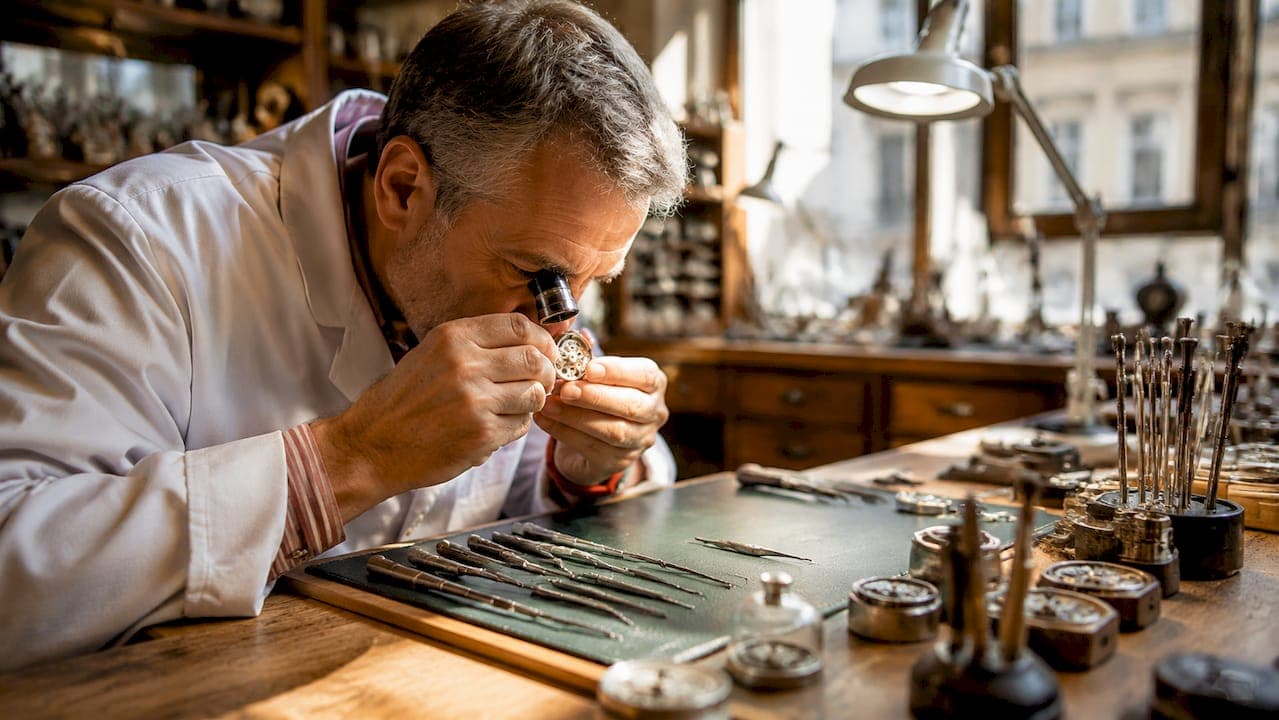
A Swiss service center is a dedicated facility that provides specialized maintenance, repair, and authentication services for luxury Swiss timepieces. For collectors who own a Rolex, Patek Philippe, Audemars Piguet, or Omega, choosing the right service center in Switzerland directly affects both the performance and long-term value of the watch. This guide explains what these facilities offer, how they communicate with clients, and how to choose between factory-authorized and independent options. You will also find practical steps to prepare your watch before sending it in.
What does a Swiss service center actually do?
A Swiss service center handles far more than battery replacements. The core offering is a full mechanical overhaul, which involves disassembling the movement, cleaning every component, replacing worn parts, and reassembling the watch to factory tolerances. Authentication and certification services are equally central, particularly for collectors who plan to resell or insure a timepiece.
The range of services typically includes:
- Full movement overhaul: Disassembly, ultrasonic cleaning, lubrication, and regulation
- Case and bracelet refinishing: Polishing or brushing to restore the original surface finish
- Crystal replacement: Sapphire or mineral crystal swapped using OEM components
- Water resistance testing: Pressure testing to manufacturer specifications after reassembly
- Authentication and documentation: Written certification confirming genuine parts and service history
- Express service: Same-day response available for urgent cases reported before noon
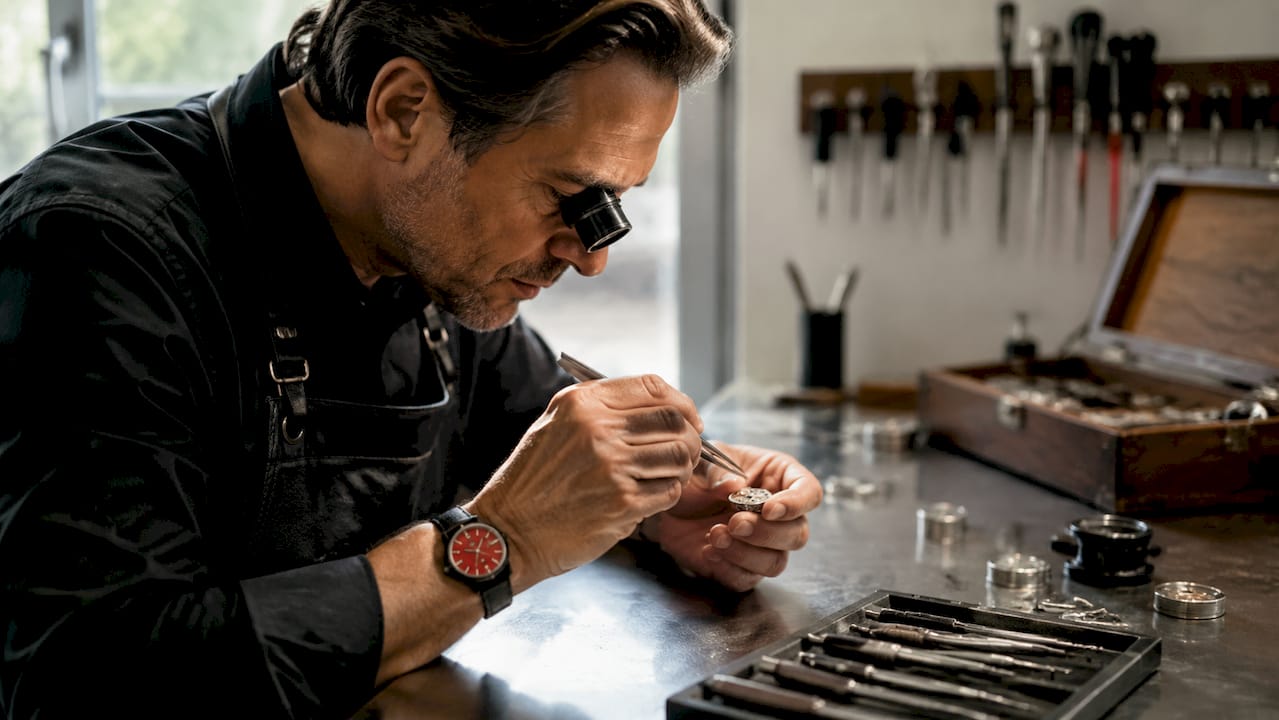
Factory-trained watchmakers use original equipment manufacturer (OEM) spare parts. OEM parts matter because aftermarket components can affect movement accuracy and void any remaining manufacturer warranty. The Maurice Lacroix service center, operating since 1984, is a clear example of a facility that carries extensive inventories of certified spare parts and employs watchmakers trained specifically on that brand's calibers.
Pro Tip: Ask the service center to provide a written parts list with your final invoice. This document becomes part of your watch's service history and adds provenance value at auction or resale.
How do Swiss service centers handle customer communication?
Professional communication is a defining standard of Swiss repair services, not an optional extra. Swiss customers expect contact during Swiss business hours, with phone and email support available Monday through Friday from 8:00 AM to 6:00 PM and Saturday from 9:00 AM to 5:00 PM. Missing that window creates friction and erodes trust quickly.
Language fluency is equally non-negotiable. Switzerland has four official languages, and the dominant service languages are German, French, and Italian. A facility that handles only English correspondence will lose credibility with a significant portion of its domestic clientele. Aurenus, a Swiss inbound service provider, handles client calls and emails with native language fluency and cultural understanding, treating each interaction as a chance to reinforce brand trust. That standard applies directly to watch service centers competing for collector loyalty.
The four communication practices that separate good centers from great ones:
- Upfront cost estimates: Provide a written quote before any work begins, with no hidden fees added at collection.
- Clear shipping and customs guidance: Transparency about customs and delivery charges is critical for cross-border clients sending watches from the United States or Asia.
- Proactive status updates: Send a confirmation when the watch arrives, when the diagnosis is complete, and when the watch ships back.
- Published FAQ: A detailed FAQ on the website reduces inbound inquiries and sets accurate expectations before a client ever picks up the phone.
"Each customer interaction is an opportunity to reinforce trust and loyalty by providing empathetic, timely, and culturally aware support." — Aurenus Inbound Service
Swisstech Services AG publishes its service hours as Monday through Friday from 08:00 to 17:00 and Saturday from 09:00 to 12:00. That transparency signals to clients that the facility operates on a predictable, professional schedule. Collectors sending a Patek Philippe or Omega across borders need that predictability to plan insurance coverage and shipping logistics.
Factory-authorized vs. independent: which service center is right for you?
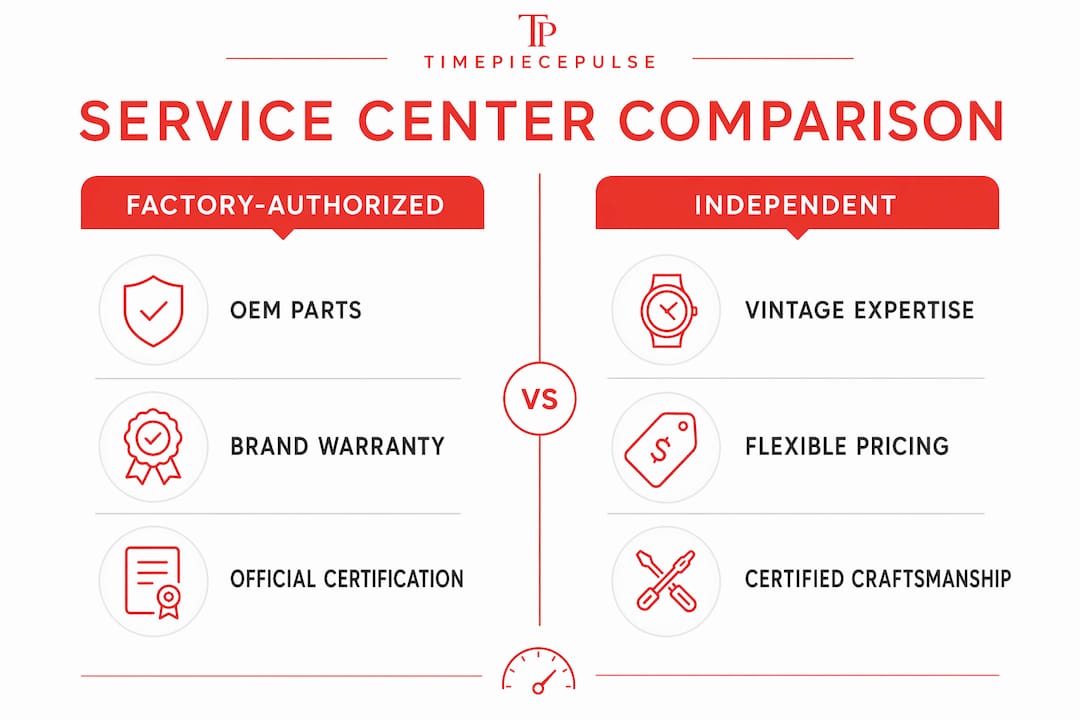
The choice between a factory-authorized and an independent service center is the most consequential decision a collector makes. Both have real advantages, and the right answer depends on the watch, the budget, and the collector's priorities.
| Factor | Factory-authorized center | Independent watchmaker |
|---|---|---|
| Parts sourcing | OEM parts direct from the brand | Third-party or salvaged OEM parts |
| Brand certification | Official service stamp and documentation | No brand certification issued |
| Cost | Higher, reflects brand overhead | Generally lower |
| Turnaround time | Can be longer due to parts ordering | Often faster |
| Warranty on work | Manufacturer-backed warranty | Workshop warranty only |
| Best for | Watches under manufacturer warranty or high-value pieces | Vintage watches or out-of-warranty repairs |
Factory-authorized centers carry the brand's official certification. For a Rolex or Audemars Piguet still under warranty, sending the watch anywhere else voids that coverage. The Maurice Lacroix certified facility illustrates the model: decades of brand-specific expertise, official parts inventory, and documented service records that travel with the watch.
Independent watchmakers fill a genuine gap for vintage collectors. A 1960s Omega Constellation, for example, may require parts that the brand no longer manufactures. A skilled independent watchmaker with access to new-old-stock components can restore that movement when no authorized center can. The trade-off is the absence of brand documentation, which matters at auction.
Pro Tip: Before committing to any facility, verify credentials through the brand's official website. Rolex, Omega, and Patek Philippe each maintain searchable databases of authorized service partners. A five-minute check protects a five-figure investment.
Verifying reputation goes beyond the brand database. Look for membership in organizations like the Watchmakers of Switzerland Training and Educational Program (WOSTEP) or the British Horological Institute (BHI). These credentials signal formal training and adherence to professional standards, regardless of brand authorization status.
How to prepare your watch for service
Preparation before sending a watch to any Swiss technical assistance facility reduces errors, protects your investment, and speeds up the process. Collectors who arrive unprepared often face delays, disputes over pre-existing damage, and incomplete service records.
Follow these steps before handing over or shipping any timepiece:
- Photograph every angle: Shoot the dial, case, caseback, bracelet, and any visible scratches or damage. Date-stamp the photos. This creates a clear baseline if any dispute arises.
- Record the reference and serial numbers: Reference numbers identify the exact model and movement variant, which the service center needs to order the correct parts.
- Gather existing service records: Any prior service documentation increases the center's efficiency and adds to the watch's provenance.
- Confirm shipping insurance: Declare the full replacement value, not the purchase price. Luxury watches appreciate, and underinsurance is a common and costly mistake.
- Ask about the warranty on service work: Most reputable centers offer a warranty of one to two years on parts and labor. Get this in writing before authorizing any work.
- Clarify customs procedures for cross-border shipments: Unclear shipping policies are a leading reason clients lose confidence in service providers. Ask the center to walk you through the import and export documentation required.
One mistake collectors consistently make is sending a watch without a written authorization form. A reputable facility will require your signature before touching the movement. If a center begins work without written consent, that is a red flag worth acting on immediately.
Pro Tip: Wind a mechanical watch to full power reserve before shipping. A fully wound mainspring holds the movement components in a stable position during transit and reduces the risk of shock damage to the escapement.
Key takeaways
A factory-authorized Swiss service center is the most reliable choice for protecting the value, warranty, and documentation of a luxury timepiece.
| Point | Details |
|---|---|
| Authorized vs. independent | Factory-authorized centers provide OEM parts and brand certification; independents suit vintage or out-of-warranty watches. |
| Communication standards | Swiss service facilities operate Monday through Friday with multi-language support; confirm hours before shipping. |
| Preparation matters | Photograph the watch, record reference numbers, and confirm insurance before sending any timepiece for service. |
| Transparency builds trust | Ask for written quotes, customs guidance, and a warranty on parts and labor before authorizing work. |
| Service history adds value | Documented service records from certified facilities increase resale and auction value for Rolex, Patek Philippe, and Omega watches. |
Why transparency is the real differentiator
The watch service industry has a trust problem that most collectors discover too late. I have seen collectors send a Patek Philippe Calatrava to a facility with an impressive website, only to receive it back with a polished case that was never requested and no documentation of which parts were replaced. The watch looked better and was worth less.
The centers that earn long-term collector loyalty are not always the ones with the fastest turnaround or the lowest price. They are the ones that communicate clearly before, during, and after the service. A written diagnosis, a line-item invoice, and a follow-up call after delivery cost the facility almost nothing. For the collector, those details are the difference between confidence and doubt every time they look at the dial.
Informed collectors get better results. When you arrive at a service conversation knowing your reference number, your movement caliber, and the specific issue you want addressed, the watchmaker spends less time on diagnostics and more time on the repair. That knowledge also signals to the facility that you are not a client who can be upsold on unnecessary work.
The best Swiss service providers treat every watch as if it will appear in a major auction catalog. That standard of care, combined with transparent communication, is what separates a facility worth trusting from one worth avoiding.
Explore trusted watch resources at Timepiecepulse
Timepiecepulse covers the full spectrum of luxury watch ownership, from acquisition to long-term care. Whether you are researching your first Omega service or evaluating a Rolex for your collection, the site's luxury watch reviews give you the context to make confident decisions.
The Timepiecepulse authorized watch guide covers service considerations alongside investment analysis for Patek Philippe, Audemars Piguet, and other blue-chip brands. If you are building a collection with resale value in mind, the affordable classics investment guide explains how proper servicing directly protects what you paid. Every resource on the site is written for collectors who treat their watches as both art and asset.
FAQ
What is a Swiss service center for watches?
A Swiss service center is a facility staffed by trained watchmakers that performs maintenance, repair, and authentication on luxury Swiss timepieces. Services range from full movement overhauls to crystal replacement and water resistance testing.
How do I find an authorized service center in Switzerland?
Check the official website of your watch brand. Rolex, Omega, and Patek Philippe each maintain searchable directories of factory-authorized service partners by country and region.
How long does a typical Swiss watch service take?
Turnaround time varies by facility and service type. Factory-authorized centers may take four to eight weeks due to parts ordering, while independent watchmakers often complete standard overhauls in two to four weeks.
Why does it matter whether a service center uses OEM parts?
OEM parts are manufactured to the brand's exact tolerances. Aftermarket components can affect movement accuracy, reduce water resistance, and void any remaining manufacturer warranty on the watch.
What should I ask before sending my watch for service?
Ask for a written cost estimate, a list of parts to be replaced, the warranty on labor and parts, and clear instructions on shipping and customs documentation for cross-border shipments.