Exquisite is defined as the highest level of beauty and craftsmanship, where perfect detail, refined elegance, and rare quality converge into something irreplaceable. The word applies to objects and experiences that reward close attention. A Patek Philippe perpetual calendar, a private after-hours tour of the Acropolis, a hand-stitched bespoke suit. Each earns the label not through price alone, but through a standard of care that most makers never reach. For serious collectors and luxury enthusiasts, understanding what separates the truly exquisite from the merely expensive is the foundation of every great acquisition.
What makes craftsmanship truly exquisite in luxury watches and designs?
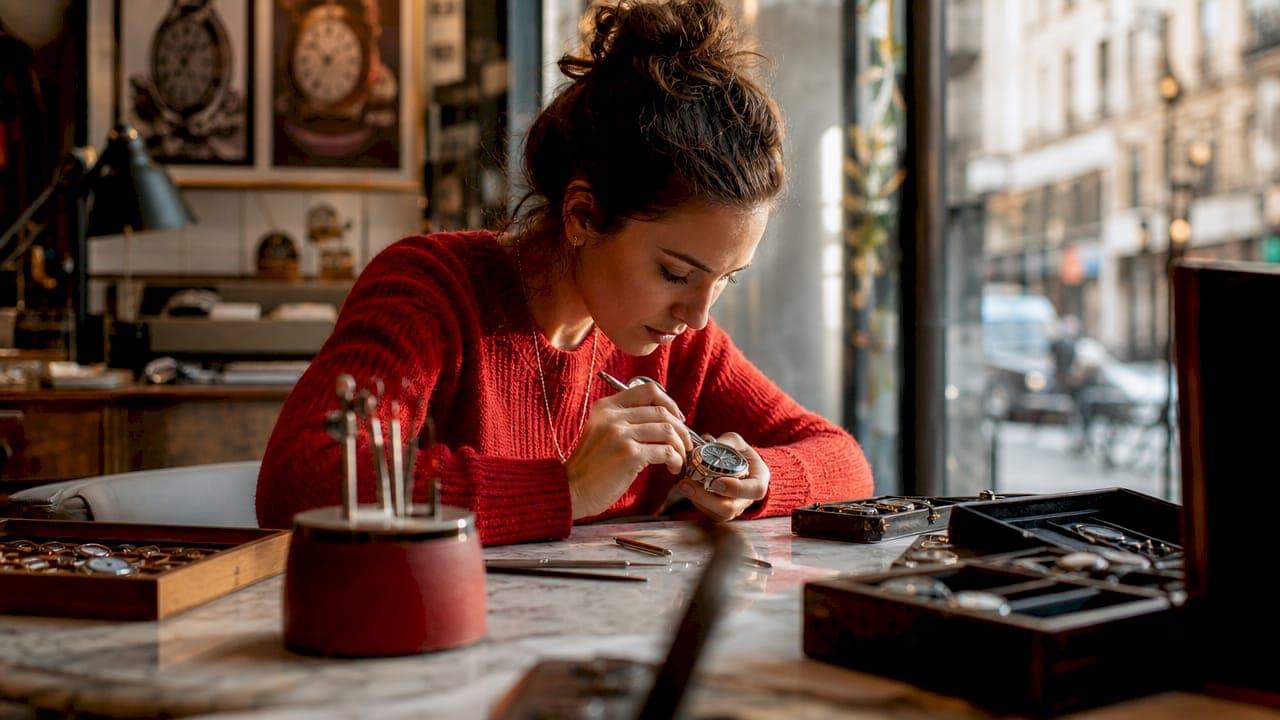
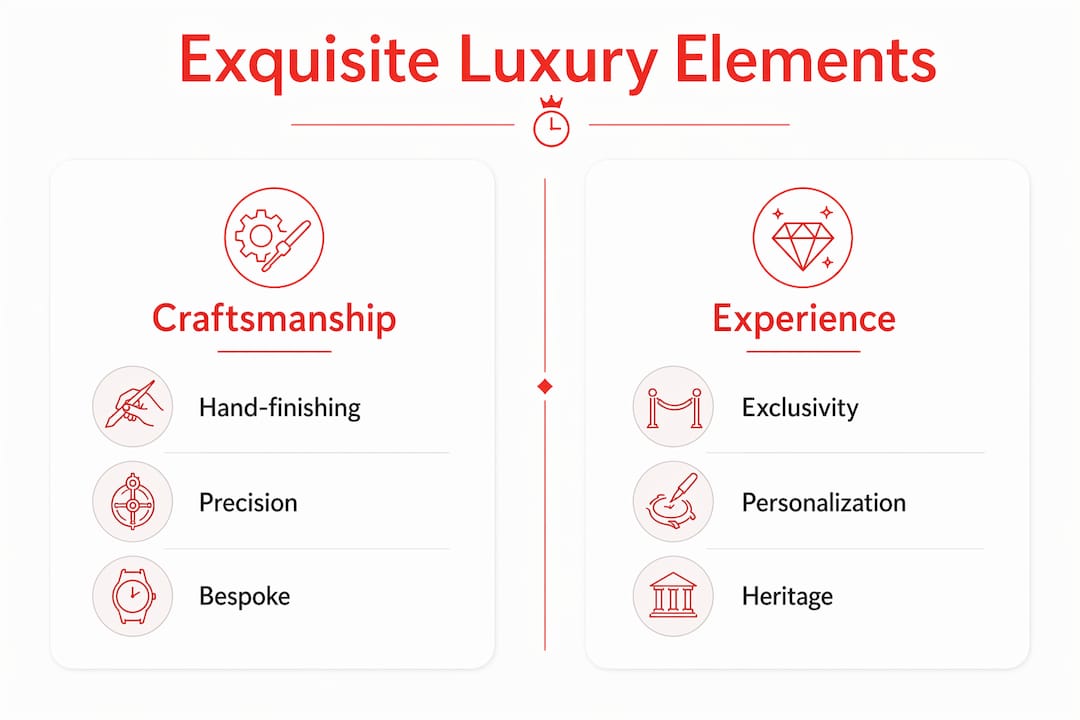
Exquisite craftsmanship is defined by the absence of compromise at every stage of production. A luxury watch movement with 300 or more individual components, each hand-finished to mirror polish, represents a different category of object than one assembled by machine alone. The difference is not always visible at first glance. It reveals itself over time, in how the piece wears, ages, and holds its value.
Structured design constraints are one of the clearest markers of superior work. Elegant design systems enforce rigid visual frameworks, including strict spacing standards and strong typography rules, that prevent the inconsistencies which betray lower craftsmanship. In watchmaking, this translates to dial symmetry, hand alignment, and the precise depth of applied indices. A misaligned index on a grand complication is not a minor flaw. It signals a failure of the entire quality process.

Bespoke work adds another layer. Iterative client consultation over weeks or months produces results that a single brief never could. The process forces both maker and client to articulate exactly what they want, and why. That friction produces clarity, and clarity produces exquisite outcomes.
Luxury renovation firms report that projects delivering exquisite results require more than 14 years of experience and over 400 completed projects, integrating architecture, engineering, and finishing at the highest level. That depth of experience is what separates a craftsperson from a technician.
Pro Tip: When evaluating a luxury watch for purchase, ask the seller for the movement finishing details. Côtes de Genève striping, perlage on the base plate, and beveled bridges are not decorative. They are evidence of a maker who holds every surface to the same standard, whether visible or not.
Key markers of exquisite craftsmanship in luxury watches include:
- Hand-finishing on every component, including parts hidden beneath the dial
- Dial symmetry and index alignment verified under magnification
- Movement architecture that reflects a coherent design language, not assembled parts
- Provenance documentation linking the piece to its original maker and service history
- Consistent design vocabulary across case, dial, and bracelet
How do ultra-luxury experiences embody the concept of exquisite?
Exquisite experiences share the same DNA as exquisite objects. They are defined by exclusivity, personalization, and a depth of sensory engagement that cannot be replicated at scale. The Acropolis Experience in Athens limits each private tour to five guests, priced at €5,000 per visit, with all revenue reinvested in cultural heritage preservation. That cap is not arbitrary. It is the mechanism that preserves the quality of the experience itself.
"The next level of luxury is hyper-personalized experiences designed as composed symphonies, emphasizing quiet thrill, exclusivity, and sensory depth." — Michelin Guide
Ultra-luxury travelers increasingly seek private yacht wildlife expeditions, dining trains through remote landscapes, and after-hours access to cultural monuments. What unites these experiences is not extravagance. It is curation. Each element is chosen to create a specific emotional response, not simply to impress.
The Acropolis Experience makes this principle explicit. Total isolation and bespoke guest care are the core product, not the monument itself. The monument has been there for 2,500 years. What the experience sells is the feeling of standing there alone, at night, with no one else in sight. That emotional specificity is what makes it exquisite.
The same logic applies to watch collecting. Acquiring a Rolex Daytona through an authorized dealer after years on a waiting list carries a different emotional weight than buying one at retail. The scarcity, the anticipation, and the relationship with the dealer are all part of the experience. They are not incidental to the object. They are inseparable from it.
What defines an exquisite luxury experience:
- Strict access limits that protect intimacy and quality
- Personalization that reflects the individual guest's preferences, not a standard menu
- Sensory depth across sight, sound, and environment
- Emotional narrative that gives the experience meaning beyond the moment
- Discreet service that anticipates needs without intruding
What role does refined taste play in acquiring exquisite items?
Sophisticated taste is not innate. It is built through exposure, study, and the willingness to ask hard questions about why one object moves you and another does not. Collectors with refined taste make better acquisitions because they have a framework for evaluation that goes beyond price and brand recognition.
Exquisite design arises from a client-provider partnership that creates timeless, coherent systems uniquely tailored to the client's story, rather than following trends. This principle applies directly to watch collecting. The collector who knows why they want an Audemars Piguet Royal Oak, and can articulate its design history and the specific reference that speaks to them, will always make a more satisfying purchase than one chasing a name.
Developing sophisticated taste in luxury timepieces follows a clear progression:
- Study design history. Learn why the Royal Oak's integrated bracelet was radical in 1972, or why the Omega Speedmaster's hesalite crystal is historically significant. Context transforms appreciation.
- Handle pieces in person. No photograph captures the weight of a Patek Philippe Nautilus or the texture of a guilloché dial. Physical contact builds a sensory vocabulary that photographs cannot.
- Seek expert consultation. Authorized dealers and independent horological experts provide access to reference knowledge that no catalog contains. Their guidance separates the exquisite from the merely expensive.
- Prioritize coherence over novelty. A watch that holds its design logic across every detail, from the case profile to the crown shape, will age better than one assembled from trend-driven choices.
- Track provenance. The history of a specific piece, its previous owners, service records, and original box and papers, adds a dimension of meaning that a new purchase cannot replicate.
The difference between exquisite and expensive is coherence. An expensive watch can be assembled from premium materials without any unifying vision. An exquisite watch reflects a maker's complete commitment to a single idea, executed without exception.
How to identify and invest in exquisite luxury timepieces
Identifying an exquisite timepiece requires a structured approach. Collectors who rely on brand reputation alone miss the variation in quality that exists even within a single manufacturer's catalog. A watch collecting expert guide will consistently direct you toward reference numbers, not just brand names.
Key indicators of exquisite quality in a luxury watch
| Feature | What to look for |
|---|---|
| Movement finishing | Côtes de Genève, perlage, beveled bridges, blued screws |
| Dial quality | Even lacquer depth, sharp printing, no dust under the crystal |
| Case finishing | Alternating polished and brushed surfaces with clean transitions |
| Provenance | Original box, papers, service history, and reference number verification |
| Design coherence | Consistent visual language from case to dial to bracelet |
Reference numbers matter more than most new collectors realize. Within the Rolex catalog, for example, specific dial variants and production years carry significantly different collector value than the same reference with a standard configuration. The top exquisite timepieces in any given year are almost always distinguished by these secondary details, not by the model name alone.
Common pitfalls in luxury watch acquisition include paying a premium for a watch with replaced parts, acquiring pieces without original documentation, and confusing high retail price with high collector value. A watch that costs more at retail is not automatically more exquisite than one that costs less. The standard is craftsmanship and coherence, not price.
Pro Tip: Before any significant purchase, request a loupe inspection of the movement through the caseback. A maker who finishes the movement to the same standard as the exterior is telling you something about their values. One who does not is telling you something equally important.
Key Takeaways
Exquisite quality in luxury items and experiences is defined by rigorous craftsmanship standards, strict exclusivity, and a coherent creative vision that prioritizes depth over display.
| Point | Details |
|---|---|
| Craftsmanship over price | Exquisite watches are defined by finishing standards and design coherence, not retail cost. |
| Exclusivity preserves quality | Strict access limits, as seen in private luxury experiences, are the mechanism that protects the experience itself. |
| Taste is built, not inherited | Studying design history, handling pieces, and seeking expert guidance develops the framework for exquisite acquisitions. |
| Provenance adds meaning | Original documentation and service history give a timepiece a dimension of value that condition alone cannot. |
| Coherence is the final test | An exquisite object holds its design logic across every detail, from the movement to the clasp. |
Why I think most collectors are looking for exquisite in the wrong places
The luxury market has trained collectors to equate exquisite with visible. The loudest logos, the most recognizable silhouettes, the pieces that photograph best. I have spent years watching collectors chase those signals and end up with impressive shelves and hollow collections.
The pieces that genuinely reward long-term ownership are the ones that reveal themselves slowly. A Patek Philippe movement that you notice differently every time you open the caseback. An Omega Speedmaster whose dial patinas in a way that is specific to your ownership history. These are not the pieces that generate the most attention at a dinner table. They are the ones you reach for first every morning.
The market for hyper-personalized luxury is growing because collectors are starting to recognize this. Privacy and exclusive access now rank above price for high-net-worth buyers across categories, from travel to timepieces. That shift reflects a maturing of taste at the top of the market. The challenge for collectors at every level is to apply the same standard. Ask not what a piece signals to others, but what it means to you. That question is the beginning of a genuinely exquisite collection.
Timepiecepulse: your resource for premium watch expertise
Collectors who take craftsmanship seriously need a resource that matches that standard. Timepiecepulse provides in-depth luxury watch reviews covering the details that matter to serious buyers, from movement finishing grades to reference-specific collector value.
The guides at Timepiecepulse are written for collectors who already know the brand names and want to go deeper. Whether you are evaluating a first significant acquisition or adding a specific reference to an established collection, the analysis at Timepiecepulse gives you the framework to make decisions with confidence. Every review prioritizes authenticity, design coherence, and long-term value over trend-driven hype.
FAQ
What does exquisite mean in the context of luxury goods?
Exquisite describes an object or experience defined by flawless craftsmanship, refined beauty, and rare attention to detail. In luxury goods, it signals a standard of quality that goes beyond price to reflect coherent design and expert execution.
How do I recognize exquisite craftsmanship in a luxury watch?
Look for hand-finished movement components, dial symmetry, consistent surface finishing across the case, and original provenance documentation. A maker who holds every surface to the same standard, visible or not, is the clearest signal of exquisite quality.
What separates an exquisite experience from a merely expensive one?
Exquisite experiences prioritize strict exclusivity, deep personalization, and emotional engagement over display. The €5,000 Acropolis Experience, capped at five guests, demonstrates that limiting access is what creates genuine quality, not simply raising the price.
Why does provenance matter when acquiring exquisite timepieces?
Provenance, including original box, papers, and service history, connects a specific piece to its full history and confirms authenticity. It adds a layer of meaning and collector value that condition alone cannot provide.
How does sophisticated taste develop in luxury watch collecting?
Sophisticated taste builds through studying design history, handling pieces in person, and seeking expert consultation. Collectors who understand why a specific reference matters will consistently make more satisfying and valuable acquisitions than those guided by brand recognition alone.