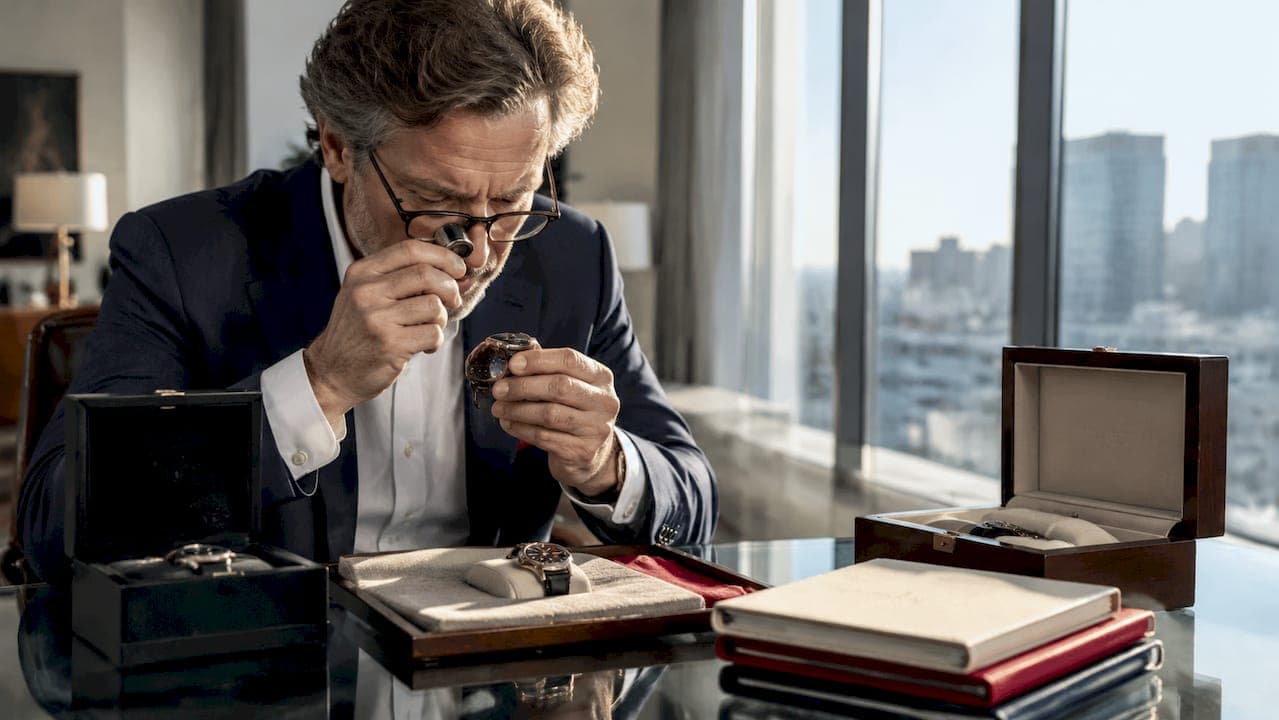
Watch collecting best practices are the core methods that keep luxury timepieces authentic, valuable, and well-maintained across decades of ownership. Serious collectors treat authentication, valuation, and maintenance not as optional steps but as the three pillars that determine whether a collection grows in worth or quietly deteriorates. Brands like Rolex, Patek Philippe, Audemars Piguet, and Omega reward collectors who follow disciplined acquisition and care habits. This guide covers every essential practice, from spotting counterfeit components to structuring insurance policies that actually pay out.
1. What are the best authentication methods for luxury watches?
Authentication is the first line of defense in any serious collection. A watch that cannot be verified as genuine loses most of its resale value and collector credibility instantly.
The most reliable authentication methods combine official documentation, serial number verification, and hands-on expert appraisal. Original box and papers, often called "full set" in the collector community, confirm factory origin and establish a chain of ownership. Serial numbers on the case, caseback, and movement must align with manufacturer records. Any mismatch signals a "franken-watch," a piece assembled from parts of multiple watches, which carries a fraction of the value of a complete original.
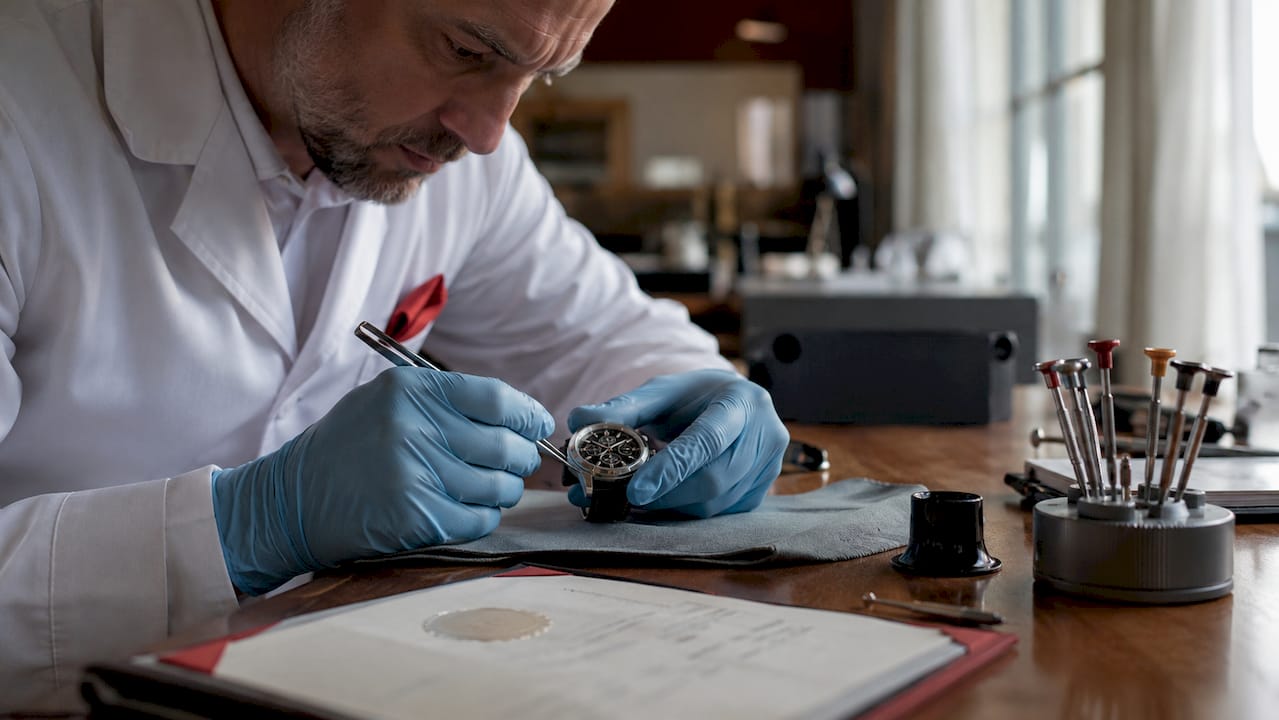
Manufacturer-authorized service centers offer the most trustworthy verification for watches above $20,000. Authorized service preserves resale value better than independent servicing, especially for in-house movements found in Patek Philippe and Audemars Piguet. Independent watchmakers may be skilled, but they cannot access proprietary caliber data or issue brand-certified service records.
Community resources add a useful second layer. Forums like Watchuseek and dealer networks such as Chrono24's trusted seller program allow collectors to cross-reference reference numbers and spot anomalies. Reference numbers are the fingerprint of every watch model, encoding dial configuration, case material, and production era in a single string.
- Demand original box, papers, and warranty card for every purchase.
- Verify serial numbers against manufacturer records before completing any transaction.
- Use authorized service centers for authentication on pieces valued above $20,000.
- Consult trusted dealer networks and collector forums to cross-check reference numbers.
- Reject any watch with replaced or refinished dials, as originality drives collector value.
Pro Tip: Request a loupe inspection of the dial printing and lume plots. Counterfeit dials often show uneven printing edges and incorrect lume color under magnification.
2. How to value and track your watch collection effectively
Accurate valuation is what separates a hobby from a genuine investment strategy. Collectors who track their pieces systematically make better buying decisions and recover more value when they sell.
Keeping detailed logs with photos of each watch, showing the serial number, dial, caseback, and movement, is the foundation of any collection record. These records serve dual purposes: they support insurance claims and they document provenance for future buyers. A watch with a complete photographic history commands a premium on the secondary market.
Auction dynamics require specific knowledge. Buyer's premium adds approximately 26% to the hammer price at major auction houses like Phillips, Christie's, and Sotheby's. That means a watch that sells for $10,000 at auction actually costs the buyer roughly $12,600. Beginners should limit initial auction purchases to 10% of their total budget to absorb the learning curve without overexposing their capital.
Regular market research keeps valuations current. Chrono24 and WatchCharts publish real-time secondary market prices that reflect actual transaction data, not retail sticker prices. Retail prices for Rolex and Patek Philippe often diverge significantly from gray market values, and knowing both figures is critical for accurate portfolio tracking.
Valuation tracking essentials
| Task | Frequency | Tool or method |
|---|---|---|
| Photograph dial, caseback, movement | At acquisition and after each service | High-resolution camera or smartphone |
| Update secondary market value | Every 6 months | Chrono24, WatchCharts |
| Review insurance coverage | Annually | Agreed-value policy review with broker |
| Log service history | After every service | Physical binder or digital spreadsheet |
3. What are maintenance best practices for mechanical and quartz watches?
Mechanical and quartz watches have different service requirements, and confusing the two leads to preventable damage. Knowing the correct interval for each type is the foundation of sound maintenance.
Mechanical watches require servicing every 4–7 years. Quartz watches need battery and seal checks every 2–3 years. Chronographs, with their additional gear trains and levers, need attention more frequently than standard mechanical movements. Skipping service intervals does not save money. It accelerates wear on pivots and jewels, turning a $500 service into a $3,000 movement overhaul.
Daily care habits prevent the majority of avoidable damage. Daily inspections for dirt accumulation, crown security, and moisture ingress are simple habits that catch problems before they become expensive. A crown left unscrewed on a Rolex Submariner, for example, voids its water resistance entirely. Wipe cases with a soft microfiber cloth after wear and avoid exposing watches to perfumes, solvents, or chlorinated water.
Watch winders are widely marketed but not necessary for modern movements. Automatic movements are designed to be wound by hand when needed. Continuous winding from a winder can actually accelerate rotor and mainspring wear over time. Store unworn watches in a cool, dry environment away from direct sunlight and magnetic fields.
- Service mechanical watches every 4–7 years; quartz watches every 2–3 years.
- Use manufacturer-authorized service for any watch valued above $20,000.
- Inspect crowns, seals, and case surfaces daily before and after wear.
- Avoid watch winders for long-term storage of automatic movements.
- Keep watches away from magnets, including laptop speakers and bag clasps.
Pro Tip: Before sending a watch for service, photograph the movement, dial, and caseback in detail. This protects you if any original parts are swapped during the service process.
4. How to optimize storage, insurance, and collection management
Storage and insurance are where many collectors cut corners, often discovering the consequences only after a theft or damage claim. Getting both right from the start protects years of investment.
Proper storage requires a TL-30 rated safe bolted directly to the building structure. A TL-30 rating means the safe resists tool attack for 30 minutes, which exceeds the average residential burglary duration. Bolting eliminates the risk of the entire safe being removed. Avoid prolonged storage in bank safe deposit boxes without periodic inspection. Humidity and temperature fluctuations inside deposit boxes can damage seals and lubricants over time.
Insurance for watch collections valued above $25,000 requires an agreed-value policy, not a standard homeowner's rider. Agreed-value premiums typically cost 0.30% to 0.60% of the collection's value annually, provided appropriate security measures are in place. That means a $50,000 collection costs between $150 and $300 per year to insure properly. Standard homeowner's policies cap jewelry and watch coverage at $1,500 to $2,500, which covers almost nothing in a serious collection.
Storage vs. insurance options compared
| Option | Best for | Key limitation |
|---|---|---|
| TL-30 rated home safe | Daily-access collections | Requires professional installation |
| Bank safe deposit box | Long-term archival storage | No insurance coverage; limited access |
| Agreed-value insurance policy | Collections over $25,000 | Requires full documentation and appraisal |
| Standard homeowner's rider | Collections under $2,500 | Severely limited payout ceiling |
Documentation is the bridge between a denied claim and a full payout. Keep original receipts, purchase invoices, original packaging, and service records for every piece. Photograph each watch against a neutral background with the serial number visible. Store copies of all documentation in a separate location from the watches themselves, such as a cloud backup or a fireproof document safe.
5. How to build a focused, meaningful collection over time
The most valuable collections are built slowly and deliberately. Hype-driven purchasing produces regret. Collectors who buy based on social media trends often find themselves holding pieces they do not connect with, at prices that have already peaked.
Setting hard size limits and using a one-in-one-out policy keeps a collection focused and meaningful. This discipline forces collectors to evaluate each potential acquisition against what they already own. The result is a tighter, higher-quality collection rather than a sprawling accumulation of impulse purchases.
Maintaining originality is the single most powerful way to protect long-term value. Unaltered dials and movements significantly enhance collector interest and value retention. A Rolex Daytona with a refinished dial loses a substantial portion of its collector premium regardless of how good the refinish looks. Original patina, original hands, and original lume are features, not flaws.
Patience and gradual growth produce the most rewarding collections. Spend the first year studying references, attending watch fairs, and handling as many pieces as possible before committing significant capital. Knowledge compounds faster than money in this hobby.
Key takeaways
The most effective watch collecting strategy combines rigorous authentication, disciplined valuation tracking, and consistent maintenance to build a collection that holds and grows in value.
| Point | Details |
|---|---|
| Authenticate before every purchase | Verify serial numbers, demand full set documentation, and use authorized service centers for pieces above $20,000. |
| Track valuation systematically | Log photos, service history, and secondary market prices every six months using tools like Chrono24 or WatchCharts. |
| Service on schedule | Mechanical watches need service every 4–7 years; quartz watches every 2–3 years to prevent costly movement damage. |
| Insure with agreed-value policies | Collections above $25,000 require dedicated agreed-value coverage at 0.30%–0.60% annually, not homeowner's riders. |
| Collect with patience and purpose | Avoid hype-driven buying; use a one-in-one-out policy and prioritize originality to maximize long-term value. |
What I've learned from years of watching collectors get this wrong
The single most common mistake I see is treating watch collecting like stock trading. Collectors chase references that are trending on Instagram, pay premiums at the peak of hype cycles, and then wonder why their Rolex Submariner bought in 2022 is worth less than they paid. The market does not reward trend-chasers. It rewards people who understand what they own.
New collector's remorse is real. Almost every serious collector I know bought something in their first year that they later sold at a loss. That is not a failure. It is tuition. The mistake is not learning from it and repeating the same pattern with more expensive pieces.
The collectors I respect most have one thing in common: they wear their watches. A Patek Philippe Calatrava sitting in a safe for five years does not build the emotional connection that makes collecting meaningful. Wear the watch, study how it ages, notice what the dial looks like in different light. That relationship is what separates a collector from someone who just owns expensive objects.
My honest advice for anyone building a collection: buy the best example of one reference you genuinely love before buying three mediocre examples of references you feel you should own. Depth beats breadth every time. And always, always keep the box and papers.
Explore expert watch reviews and guides at Timepiecepulse
Building a collection with confidence requires access to trusted, expert-level information on every reference you consider. Timepiecepulse provides in-depth luxury reviews covering Patek Philippe, Rolex, Audemars Piguet, and Omega, with authentication guidance and buying advice written for serious collectors.
Whether you are acquiring your first luxury piece or refining an established collection, Timepiecepulse covers the references that matter most. From entry-level Omega models to six-figure Patek complications, the site's affordable classics guide helps collectors identify pieces with genuine long-term value. Every review prioritizes authenticity, originality, and investment merit over hype.
FAQ
What is the most important step in watch collecting?
Authentication is the most critical first step. Verifying serial numbers, demanding original documentation, and using authorized service centers protects both your investment and your collection's long-term value.
How often should I service my luxury watch?
Mechanical watches need service every 4–7 years; quartz watches require battery and seal checks every 2–3 years. Chronographs need more frequent attention due to their additional mechanical complexity.
Do I need special insurance for my watch collection?
Collections valued above $25,000 require an agreed-value insurance policy. Standard homeowner's policies typically cap watch coverage at $1,500 to $2,500, which is insufficient for any serious collection.
Should I use a watch winder for storage?
Watch winders are not necessary for modern automatic movements. Continuous winding can accelerate rotor wear. Store unworn watches in a cool, dry environment and wind them by hand when needed.
How do I know if a watch is a franken-watch?
A franken-watch contains parts from multiple watches, such as a dial from one reference fitted to a case from another. Cross-reference the serial number, reference number, and all components against manufacturer records and consult a trusted dealer or authorized service center before purchasing.