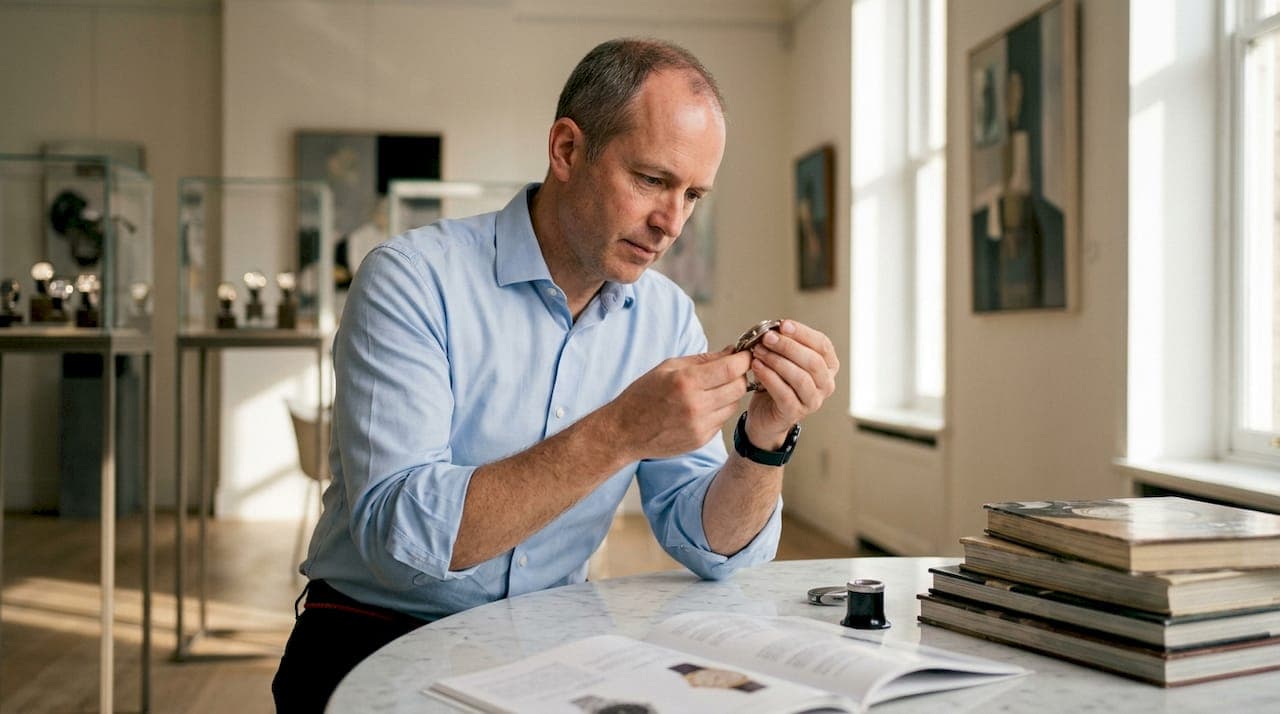
Watch discovery at auction houses is a curated, multi-layer process built on specialist vetting, detailed cataloging, public previews, and direct expert consultation. This is the industry's term for "lot discovery," the structured sequence buyers use to identify, verify, and confirm a watch before bidding. Houses like Phillips, Sotheby's, and Christie's do not simply list watches and wait. They build each sale around intentional editorial choices, and understanding how watch discovery happens at auction houses gives you a real edge as a collector or investor.
How do auction houses curate and prepare watch listings for discovery?
Watch discovery is editorial and curated, not random chance. Auction house specialists actively hunt for significant timepieces, approach consignors, and build catalogs around a deliberate narrative of rarity and quality. A Patek Philippe reference 2499 or a Rolex "Paul Newman" Daytona does not appear in a Phillips catalog by accident. It gets there because a specialist recognized its significance and made the case for its inclusion.
Major auction houses publish detailed lot pages 2–3 weeks before the sale. Each lot page includes a lot number, description, estimate range, provenance notes, and a condition summary. These catalog entries are the primary research documents for every serious bidder. The depth of detail in a catalog entry scales with the anticipated value of the lot.
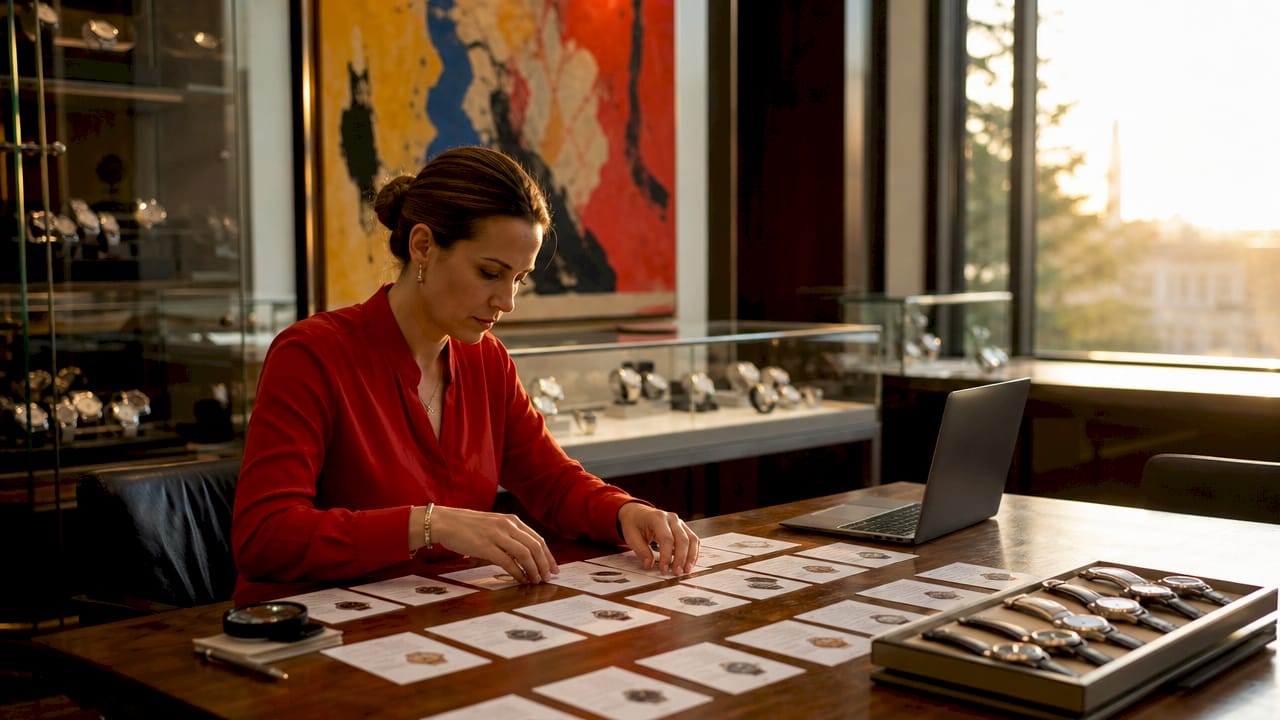
Curation detail differs by lot value. A six-figure Audemars Piguet Royal Oak will receive a full provenance essay, multiple high-resolution images, and detailed mechanical notes. A lower-estimate lot may get a shorter description. This means you cannot judge catalog accuracy by length alone. A brief entry does not signal a lesser watch. It signals a watch that needs more of your personal investigation.
Pro Tip: Read the provenance section of every catalog entry carefully. Auction houses use specific language like "acquired directly from the original owner" or "from a private European collection" as shorthand for traceability. Vague provenance language is a signal to ask more questions before bidding.
The watch collecting best practices that separate experienced bidders from first-timers almost always start here, in the catalog. Learning to read lot descriptions the way a specialist writes them is a skill that pays off at every auction.
What role does the public viewing period play in the watch discovery process?
The public viewing period is where catalog-based discovery becomes confirmed selection. A viewing period of 3–4 days before the auction gives bidders free, open access to examine every lot in person. No appointment is required at most major houses. You walk in, ask to see any watch, and handle it under the supervision of a staff member.
In-person inspection reveals details that no photograph captures. Dial originality, case sharpness, lug wear, and crown condition all read differently under a loupe than on a screen. A watch that photographs beautifully may show significant polishing in person. A watch with a modest catalog image may reveal extraordinary original condition when you hold it.
The viewing period also gives you direct access to auction staff. You can ask questions, request that a specific watch be brought out from storage, and compare two lots side by side. This kind of hands-on comparison is not available through any online research tool.
The steps that turn a preview visit into a productive discovery session follow a clear sequence:
- Download the catalog before you arrive. Mark every lot you want to examine and note your specific questions for each one.
- Bring a loupe. A 10x loupe is standard. It lets you check dial printing, hands, and indices for originality.
- Examine the case back. Engravings, serial numbers, and case back condition tell you about service history and ownership.
- Ask staff about condition report availability. Not every lot has a published report. Staff can often provide additional detail verbally.
- Compare your in-person observations against the catalog description. Discrepancies are not always red flags, but they always warrant a follow-up question.
Pro Tip: Attend the preview on the first day it opens. Staff are freshest, the room is less crowded, and you have the most time to ask detailed questions without feeling rushed.
How do specialist consultations enhance watch discovery at auctions?
Auction houses offer phone and video consultations with watch specialists, and this is among the most useful research steps available to serious bidders. A specialist consultation goes well beyond what any catalog entry contains. You can ask about comparable sales, market history for a specific reference, and condition nuances that the written description does not address.
Specialist conversations regularly surface information that never appears in print. A specialist may tell you that a particular dial has been confirmed original by a known expert, or that a case has been lightly polished but retains strong lines. That kind of context changes your bidding calculus entirely. It is the difference between bidding with confidence and bidding with uncertainty.
The most productive specialist consultations cover these areas:
- Dial originality. Ask directly whether the dial has been confirmed original. Replacement dials are the single most common authenticity issue in vintage watch auctions.
- Parts replacement. Inquire about hands, crowns, and pushers. Period-correct parts matter significantly for Patek Philippe and Rolex references.
- Service history. Ask when the movement was last serviced and by whom. A recent service by an authorized center adds value. An unknown service history adds risk.
- Comparable sales. Ask the specialist what similar references have sold for in the last 12–18 months. This gives you a real market anchor beyond the printed estimate.
- Bidding strategy. Specialists will not tell you what to bid, but they will tell you whether a lot has generated significant pre-sale interest.
Consulting reputable second-hand watch platforms alongside auction specialist input gives you a full market picture before you commit to a bid.
What tools and documents support watch appraisal and authenticity during discovery?
Condition reports summarize physical state, mechanical function, and authenticity, and they directly affect bidder confidence and final valuation. A thorough condition report is one of the most reliable documents you can request before bidding. It tells you what the auction house's specialists have observed, and it creates a record you can reference if questions arise after the sale.
The documents that support watch appraisal at auction fall into distinct categories, each carrying different weight:
| Document | What it confirms | Impact on value |
|---|---|---|
| Original box | Completeness and provenance | Moderate to significant |
| Papers (warranty card) | Authenticity and purchase date | Significant |
| Service records | Mechanical history and parts used | Moderate |
| COSC timing certificate | Movement accuracy at manufacture | Minor to moderate |
| Condition report | Current physical and mechanical state | High for bidder confidence |
The presence of original box and papers, often called "full set" in auction catalogs, consistently commands a premium at houses like Christie's and Sotheby's. A Rolex Submariner with box and papers from the 1960s sells for materially more than an identical watch without documentation. The papers do not make the watch more accurate. They make the watch's history traceable.
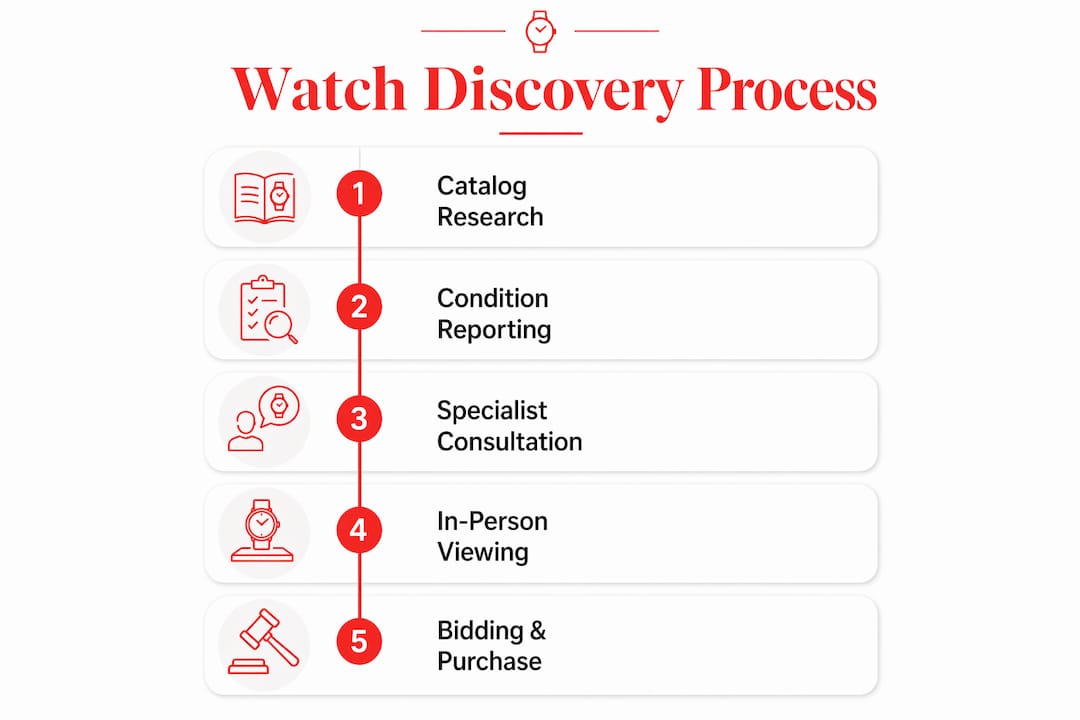
Discovery involves layered vetting and verification: catalog text, condition report, specialist call, and in-person inspection each contribute to understanding a watch's authenticity and value. Critical issues like dial originality and parts replacement often surface only through specialist questioning and hands-on checks. No single document replaces the full sequence.
Pro Tip: Request the condition report before your specialist consultation, not after. Reading it first gives you specific, informed questions to raise with the specialist rather than general ones.
How can collectors maximize their discovery success at auction houses?
Serious bidders benefit from combining catalog study with direct specialist communication and multiple inspection methods. The collectors who consistently find the best watches at auction follow a repeatable research workflow. They do not rely on any single source of information.
The most common mistake is over-trusting the catalog. A well-written lot description creates confidence, but catalog granularity varies with anticipated lot value. Bidders must adjust expectations and rely on preview and specialist dialogue to fill information gaps. A catalog entry is a starting point, not a final verdict.
Practical steps that improve discovery outcomes:
- Register early. Most houses require registration 48–72 hours before the sale. Register the moment you identify lots of interest.
- Study reference numbers. Understanding why reference numbers matter for a Patek Philippe or Omega tells you immediately whether a lot is rare or common within its line.
- Set a hard ceiling before the preview. Previews are designed to build desire. Walking in without a maximum bid invites emotional decisions.
- Attend previews even for lots you are uncertain about. In-person inspection often resolves uncertainty faster than any amount of online research.
- Follow up after the sale. If you miss a lot, ask the specialist what it sold for and why. That market data sharpens your judgment for the next auction.
Learning how to attend watch auctions effectively is a skill built over multiple sales. Each auction teaches you something the previous one did not.
Key takeaways
Watch discovery at auction houses is a structured, four-stage process: catalog research, condition documentation, specialist consultation, and in-person preview, and skipping any stage increases your risk as a bidder.
| Point | Details |
|---|---|
| Catalog is the starting point | Lot pages from Phillips, Sotheby's, and Christie's provide estimates, provenance, and condition summaries 2–3 weeks before sale. |
| Preview days are non-negotiable | A 3–4 day public viewing period lets you inspect dials, cases, and movements that photos cannot fully reveal. |
| Specialist calls add critical context | Phone or video consultations surface dial originality, parts history, and comparable sales data not printed in catalogs. |
| Documents drive valuation | Box, papers, service records, and condition reports directly affect bidder confidence and final hammer price. |
| Catalog depth varies by lot value | Higher-value lots receive more detail; use previews and specialist dialogue to fill gaps on lower-estimate watches. |
What I have learned from watching collectors work the room
The collectors who consistently win at auction are not the ones with the biggest budgets. They are the ones who treat discovery as a discipline, not a shortcut. I have watched first-time bidders walk into a Phillips preview, spend ten minutes with a catalog, and then bid confidently on a watch they barely examined. That approach works occasionally. It fails expensively.
The most instructive thing I have seen is a seasoned collector spend forty-five minutes with a single Omega Speedmaster lot. He read the condition report twice, asked the specialist three specific questions about the dial printing, and then examined the watch under a loupe for fifteen minutes. He did not win the lot. He decided not to bid after the in-person inspection revealed something the catalog description had softened. That is discovery working exactly as it should.
The misconception I hear most often is that auction house catalogs are authoritative documents. They are not. They are well-researched starting points written by specialists who have limited time per lot. The catalog tells you what the house knows and what it wants you to know. The preview and the specialist call tell you the rest.
Patience is the underrated skill in this process. The right watch at the right price appears when you have done the work across multiple auctions, not just one. Collectors who rush discovery consistently overpay or acquire watches with undisclosed issues. The ones who treat each stage as genuinely necessary build collections that hold and grow in value.
Timepiecepulse: go deeper on your auction discoveries
Identifying a watch at auction is only the first step. Knowing its full story, its reference history, its market position, and its place within a maker's catalog is what separates a confident bid from a costly guess.
Timepiecepulse publishes detailed luxury watch reviews covering Patek Philippe, Rolex, Audemars Piguet, and Omega, the exact references that appear most often in major auction sales. Each review covers authenticity markers, reference variations, and investment context. Before your next preview day, use Timepiecepulse to build the reference knowledge that makes your specialist consultations sharper and your bidding decisions more grounded.
FAQ
What is lot discovery in watch auctions?
Lot discovery is the structured process buyers use to identify, research, and verify a watch before bidding. It includes catalog review, condition report analysis, specialist consultation, and in-person preview.
How far in advance are auction catalogs published?
Major auction houses publish lot pages 2–3 weeks before the sale date. This window gives serious bidders time to complete catalog research, request condition reports, and schedule specialist consultations.
Are public previews free to attend?
Yes. Public viewing periods at houses like Phillips, Sotheby's, and Christie's are free and open to anyone. No purchase or registration is required to attend a preview.
What documents add the most value to a watch at auction?
Original box and papers consistently command the highest premium. Condition reports add bidder confidence, while service records and COSC certificates provide supporting mechanical history.
Can I speak directly with a watch specialist before bidding?
Auction houses offer phone and video consultations with specialists before the sale. These conversations are among the most useful research steps available and are free to request for any lot you are seriously considering.