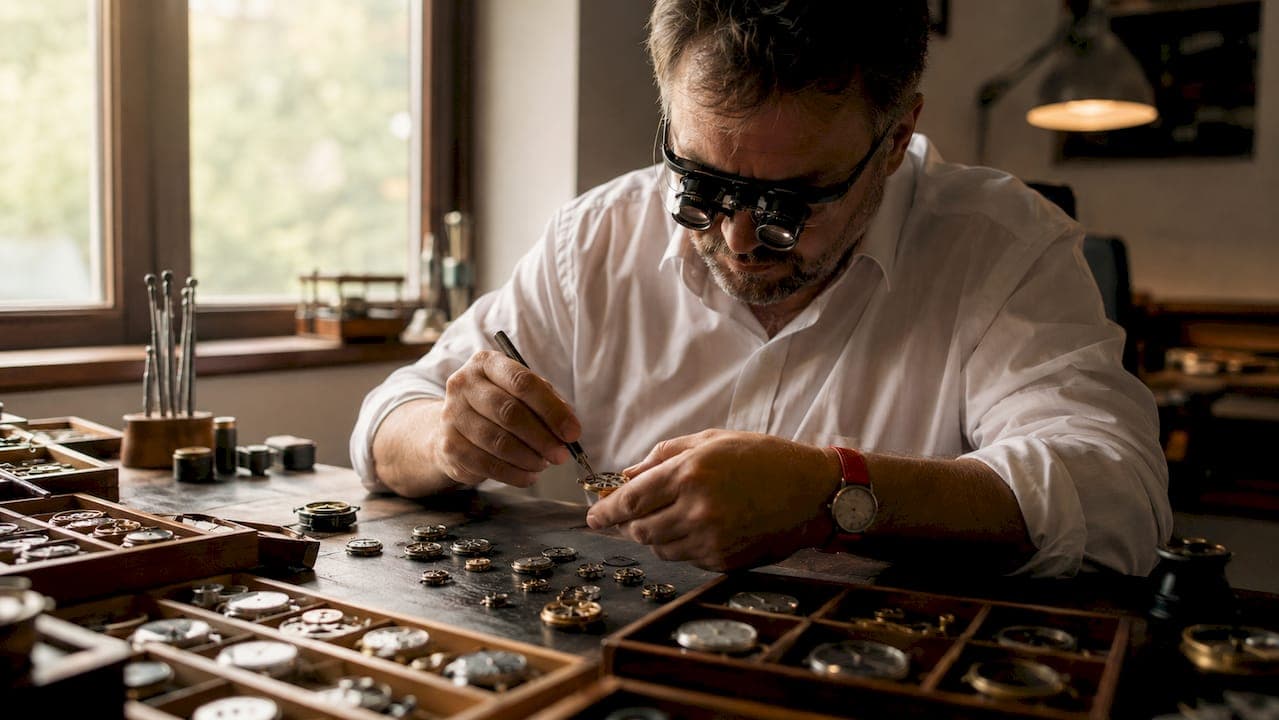
A Frankenwatch is a watch assembled from genuine parts that do not originally belong together as a factory-matched set. The term borrows from Frankenstein's monster: each component may be real and authentic on its own, but the combination was never intended by the manufacturer. For collectors of Rolex, Patek Philippe, Audemars Piguet, and Omega, understanding what is a frankenwatch explained in full detail is the difference between a sound investment and a costly mistake.
What is a frankenwatch and how is it defined?
A Frankenwatch is defined as a watch whose dial, case, and movement are all genuine but were never matched together at the factory. The industry term "marriage watch" is also used when two authentic components from different examples of the same reference are combined. Both terms describe the same problem: a watch that looks correct at a glance but fails authentication under scrutiny.
The frankenwatch meaning matters most in the vintage segment. A 1960s Rolex Submariner with an original case and movement but a replacement dial from a different reference year is a classic example. Each part is real. The watch as a whole is not original. That distinction drives every valuation conversation in serious collecting.
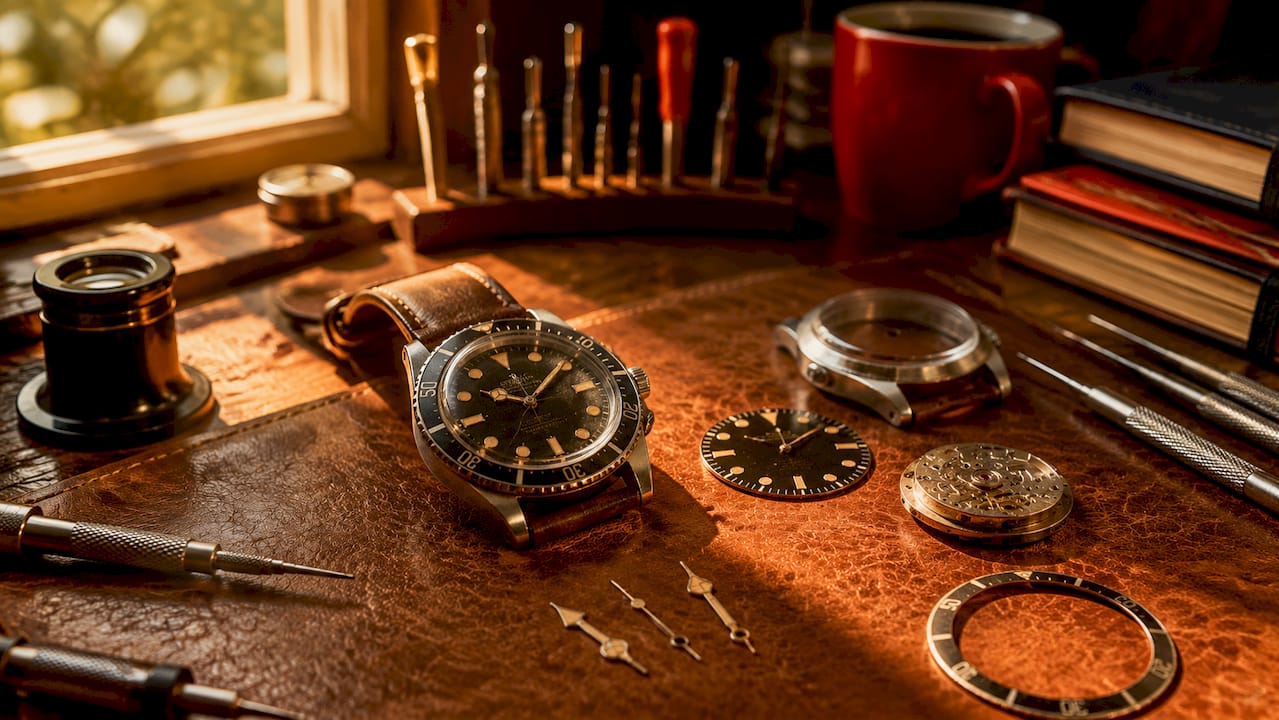
Collectors do not treat Frankenwatches as outright fakes. Collectors view them as mismatched genuine components that diminish collectibility and value rather than as counterfeits. That nuance matters because it means a Frankenwatch can pass a basic authenticity check while still failing a collector's standard.
How are Frankenwatches identified and what components are affected?
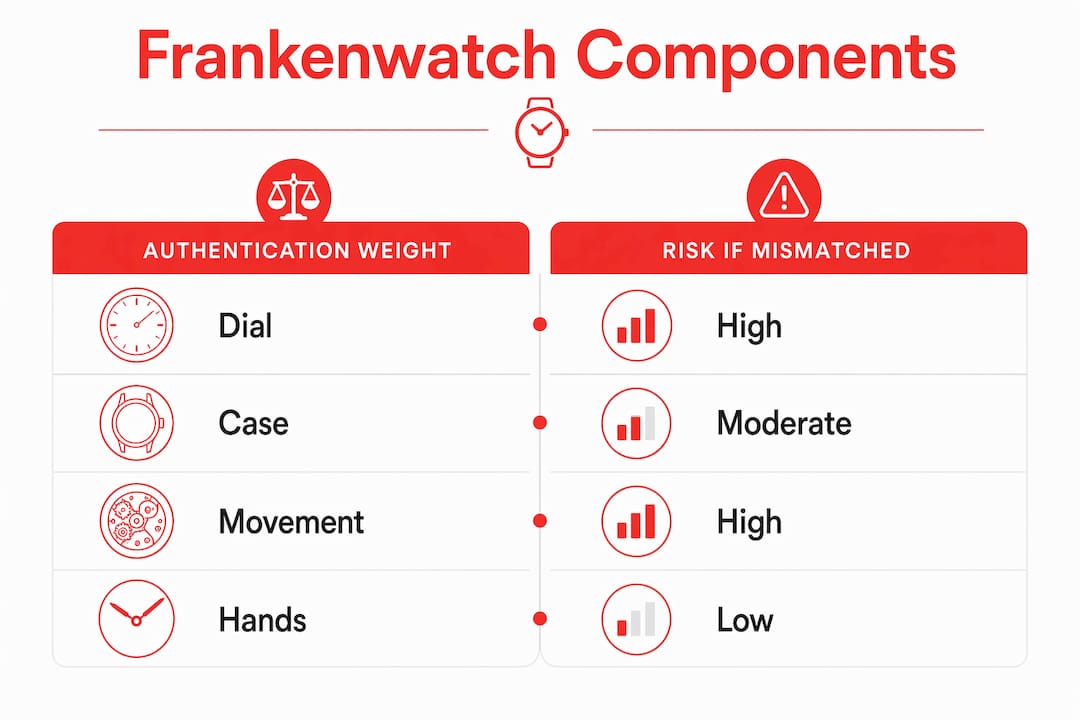
Frankenwatch components explained simply: the four parts most commonly mismatched are the dial, case, movement, and hands. Each carries its own reference numbers and finishing details. When those numbers do not align with archival records, the watch is flagged.
The most reliable detection method is cross-referencing archival documentation. Visual inspection alone is insufficient to confirm whether a case, movement, and dial were factory matched. Patek Philippe's Extract from the Archives is the gold standard. It lists the original configuration of every watch the brand produced and confirms whether the current components match what left the factory.
Common indicators of a Frankenwatch include:
- Mismatched reference numbers on the case back and movement
- Dial printing inconsistencies such as wrong font, incorrect lume plots, or a logo style from a different era
- Hands that do not match the dial generation in finish or luminous material
- Overly polished cases that remove original brushed finishing and sharp edges
- Crowns or pushers from a different reference or generation
Pro Tip: Always request the Extract from the Archives when buying a vintage Patek Philippe. Sellers who discourage this request are a red flag. Sellers who resist archival verification are often concealing mismatched components.
The table below shows which components carry the most authentication weight across major brands.
| Component | Authentication marker | Risk if mismatched |
|---|---|---|
| Dial | Reference number, printing style, lume type | High. Dials are most commonly swapped. |
| Case | Case number, reference engravings | High. Determines model identity. |
| Movement | Caliber number, serial number | High. Must match case records. |
| Hands | Finish, lume material, era match | Medium. Often overlooked by buyers. |
| Crown | Size, logo, threading | Low to medium. Frequently replaced. |
Why do Frankenwatches devalue luxury watches?
Frankenwatches strongly devalue a timepiece, particularly in high-end brands like Patek Philippe and Rolex where provenance commands a premium. A Rolex Daytona with a mismatched dial can lose a significant portion of its market value compared to an all-original example. The financial gap between original and Frankenwatch widens as the reference becomes more collectible.
The core reason is collector confidence. Buyers at the top of the market pay for certainty. A watch with mismatched parts introduces doubt about every other component. That doubt translates directly into lower bids at auction and longer time on the market for private sellers.
"Frankenwatches blur the line between restoration and deception, undermining the authenticity that defines collector value." This is why major auction houses like Christie's and Phillips require detailed condition reports and component verification before accepting vintage watches for sale.
Brands most affected by Frankenwatch concerns include:
- Rolex: Vintage Submariners, Daytonas, and GMT-Masters are heavily targeted due to high demand and part availability.
- Patek Philippe: Calatrava and Nautilus references are vulnerable given the premium placed on original dials.
- Audemars Piguet: Royal Oak references with original dials and bracelet sets command significant premiums over mixed examples.
- Omega: Speedmaster Professional models with original Hesalite crystals and correct caliber movements are frequently assembled from parts.
Mismatched components also create authentication challenges that follow the watch permanently. Once a watch is flagged in the secondary market, its resale history becomes a liability.
Frankenwatch vs authentic watch: restorations and modifications
The frankenwatch vs authentic watch distinction becomes complicated when legitimate restoration enters the picture. Not every replacement part creates a Frankenwatch. The intent, part origin, and documentation all determine whether a watch remains collectible after service.
Acceptable restorations use correct factory replacement parts or period-correct components that match the original specification. A Rolex service center replacing a worn crown with the correct factory part does not create a Frankenwatch. A private seller swapping a damaged dial for one from a different reference does.
The table below clarifies the key distinctions.
| Category | Part origin | Documentation | Collector acceptance |
|---|---|---|---|
| All-original watch | Factory matched at production | Extract or service records | Highest value |
| Genuine restoration | Factory or correct period parts | Service history available | Accepted, slight discount |
| Frankenwatch | Genuine but mismatched parts | No archival match | Significant value loss |
| Aftermarket modification | Non-original parts added | Rarely documented | Rejected by serious collectors |
Overly aggressive polishing is one of the most common Frankenwatch-adjacent alterations. It removes original brushed surfaces, softens case edges, and makes a watch photograph well while destroying collector value. Polishing does not create a Frankenwatch in the strict sense, but it signals the same disregard for originality.
Pro Tip: When evaluating a vintage watch, check the case edges under a loupe. Sharp, well-defined transitions between brushed and polished surfaces indicate an unpolished case. Soft, rounded edges suggest aggressive refinishing.
Expert opinion and documentation carry more weight than visual assessment alone. A watchmaker's letter confirming original components, combined with an archival extract, gives a watch the strongest possible authentication profile.
How to avoid buying a Frankenwatch
Practical detection starts before you ever handle the watch. Reference numbers matter more than any single visual cue. Learn the correct reference, caliber, and dial variants for the specific model you are buying before entering any negotiation.
Follow these steps when evaluating any vintage luxury watch:
- Request the Extract from the Archives for Patek Philippe or equivalent brand documentation for Rolex and Audemars Piguet. This is non-negotiable for any watch above $10,000.
- Cross-check case and movement serial numbers against published production records. Rolex serial number databases and Patek Philippe production books are widely available.
- Examine the dial under magnification. Look for reluming, repainted text, incorrect font weights, or signs of a replaced chapter ring.
- Verify hand finishing matches the dial era. Matte hands on a glossy dial from the wrong decade are a common mismatch.
- Use a reputable authentication service before purchase. Services like those offered through established auction houses or certified dealers provide written authentication reports.
- Treat suspiciously low prices as a warning. A vintage Rolex Daytona priced well below market almost always has a condition or authenticity problem.
- Check the seller's documentation history. Consistent service records from authorized dealers add credibility. Gaps in history require explanation.
Pro Tip: Consult reputable second-hand platforms that offer authenticity guarantees before buying privately. These platforms vet watches before listing and carry financial accountability that private sellers do not.
Detecting Frankenwatches requires assessing all components together rather than evaluating each part in isolation. A correct dial on an incorrect case is still a Frankenwatch.
Key Takeaways
A Frankenwatch is defined by mismatched genuine parts that were never factory matched, and that mismatch permanently reduces collector value and resale potential.
| Point | Details |
|---|---|
| Core definition | A Frankenwatch uses genuine but mismatched parts never paired at the factory. |
| Detection method | Cross-check archival extracts and serial numbers across case, movement, and dial. |
| Value impact | Mismatched components significantly reduce resale price and collector interest. |
| Restoration vs. Frankenwatch | Factory-correct replacements preserve value; mismatched genuine parts do not. |
| Buyer protection | Request brand archives, use authentication services, and avoid sellers who resist documentation. |
The Frankenwatch problem is bigger than most collectors admit
The market has a transparency problem, and Frankenwatches sit at the center of it. I have seen watches presented by well-meaning sellers who genuinely did not know their Rolex Submariner had a replacement dial from a different reference. They bought it that way, wore it for years, and assumed it was original because every part felt right. That is the insidious quality of a well-assembled Frankenwatch. It does not announce itself.
What concerns me more than deliberate fraud is the casual acceptance creeping into parts of the collector community. The argument goes: "The parts are all real, so what's the problem?" The problem is that the watch's identity is inseparable from its original configuration. A Patek Philippe Calatrava is not just a collection of Patek parts. It is a specific object with a specific history. Scrambling that history destroys something that cannot be restored.
The attitude shift I have noticed is that younger collectors, entering the market through social media and online auctions, sometimes prioritize aesthetics over provenance. A watch that photographs well gets attention. A watch with correct documentation gets respect. Those two things are not always the same watch. Education is the only answer, and that education has to start before the purchase, not after the regret.
My practical advice: treat every vintage watch as a Frankenwatch until the documentation proves otherwise. That posture protects your money and your collection's integrity.
Timepiecepulse guides for buying with confidence
Avoiding a Frankenwatch starts with knowing what to look for before you spend. Timepiecepulse publishes detailed luxury watch reviews covering authenticity markers, condition standards, and value benchmarks for Patek Philippe, Rolex, Audemars Piguet, and Omega. Each review is written for collectors who need more than a surface-level description.
The Timepiecepulse buying guides cover how to read reference numbers, what documentation to request, and which configurations command the strongest resale premiums. Whether you are buying your first vintage piece or adding to an established collection, these resources give you the factual foundation to buy with confidence and avoid the pitfalls that catch even experienced collectors off guard.
FAQ
What is the frankenwatch definition in simple terms?
A Frankenwatch is a watch built from genuine parts that were never originally paired together by the manufacturer. Each component may be authentic, but the combination was not factory matched.
How does a Frankenwatch affect resale value?
Frankenwatches reduce resale prices and collector interest because mismatched components cannot be authenticated against factory records. The value loss is most severe in high-demand references from Rolex and Patek Philippe.
Is a Frankenwatch the same as a fake watch?
No. A Frankenwatch uses genuine parts from real watches. A fake uses counterfeit components. Collectors treat Frankenwatches as a separate category that diminishes collectibility without being outright counterfeit.
What components are most commonly mismatched in a Frankenwatch?
The dial and case are the most frequently mismatched components, followed by hands and crowns. Dial swaps are the most common alteration because dials are fragile and often replaced during service.
How can I verify a watch is not a Frankenwatch before buying?
Request the brand's archival extract, cross-check case and movement serial numbers, and have the watch examined by a certified authentication service before completing any purchase.